Seeing a suburban rooftop gleam with new solar panels is subtly revolutionary, not only because it shows environmental awareness but also because it represents a financial change occurring one house at a time. Due to its exceptional ability to provide long-term profits, energy independence, and cost savings, rooftop solar has evolved from a niche option to a popular investment.
There has been a discernible convergence in recent years. Significantly lower prices for solar panels and batteries have coincided with skyrocketing electricity costs. Depending on geography and subsidies, it can now break even in as little as 1.5 to 5 years, compared to the previous seven to ten years. This change is especially advantageous for the typical homeowner. They now regard power as a recoverable investment, one panel at a time, rather than an inevitable expense.
It feels a lot like the transition from luxury to necessity of residential broadband. This time, though, energy—not connectivity—is at issue. Rooftops are subtly becoming into cash-flow assets from Delhi to Dallas. Additionally, these panels don’t call in the middle of the night or crash with the markets like mutual funds or rental properties do.
The momentum for rooftop solar in Pakistan has accelerated past the tipping point. Solar imports totaled more than $2 billion in 2024 alone, or over 17 gigawatts of electricity capacity. The grid will be impacted even if only one-third of that is turned on on rooftops. This is a reconfiguration of the national energy flow, not only an acceptance.
| Aspect | Details |
|---|---|
| Main Trend | Surge in rooftop solar investments by individuals and businesses |
| Economic Drivers | Rising electricity prices, faster ROI (1.5–5 years), and net metering |
| Government Support | Incentives, tax credits, and favorable policies |
| Market Scale | In Pakistan alone, over $2B in imports for 2024 (17 GW capacity) |
| Technology Influence | Falling solar panel and battery costs |
| Investor Interest | Strong appetite due to stable returns and rising energy independence |
| Long-Term Impact | Grid disruption, new energy finance models, increased property value |
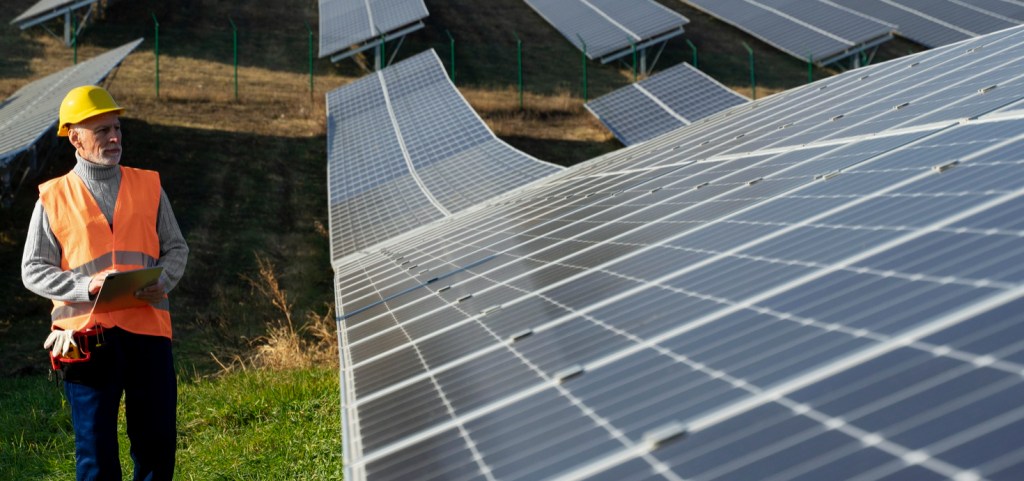
Many households are opting to store their excess batteries rather than resell them by taking advantage of declining battery prices. In addition to drastically lowering monthly bills, this change is quietly turning users into micro-grid operators. In a way, houses are changing from being passive energy consumers to being active energy centers.
I just had a conversation with a friend who had set up a small battery bank and rooftop panels in Lahore. The system paid for itself in a little more than three years, and his monthly bill decreased by 85%. He now makes a joke about how his rooftop outperforms gold, stocks, and even his rental revenue. Despite being personal, his narrative is proving remarkably widespread.
But utilities aren’t having any fun. The fixed costs of grid maintenance are shifted to the remaining base, which is typically lower-income customers, as more high-consumption households choose not to become fully dependent. Policy reaction has been triggered by this rising disparity. Regulators in nations like Pakistan suggested lowering net metering prices from Rs. 21 per unit to as little as Rs. 7.5 per unit. It was a drastic change that was obviously intended to rebalance the system, but solar adopters found it extremely unpopular.
Uncertainty is introduced by such policy changes. However, the movement as a whole is still very strong. Decentralized energy still makes sense since sunshine cannot be outsourced, and solar panels don’t break down, strike, or change their terms. They are incredibly dependable because to their silent regularity, especially when contrasted with the erratic markets for fossil fuels.
Macroeconomically, a trend that the grid facilitated is posing a threat. A system that was initially intended for one-way flow—from power plant to home—is under increasing pressure as rooftop solar gains traction. Although controllable, this disturbance necessitates structural adjustment. This entails creating a bilateral power trading market to absorb decentralized generation and switching from static net metering approaches to dynamic pricing schemes.
Fintech companies are now offering new asset classes to investors that care about the environment by combining rooftop solar loans into securitized products through strategic alliances. In order to provide more seamless integration and remuneration for generated power, smart meter firms are simultaneously attempting to simplify data between houses and the grid.
The allure of solar rooftops for investors is becoming more and more obvious. They offer inflation-resistant, physically supported returns without the hassles of conventional real estate. In some markets, a properly placed rooftop system can yield annualized returns of 15–20%. Additionally, rooftop solar is rapidly gaining traction in balanced portfolios due to its ability to increase building resale values and qualify for green loans.
Growing pains are a part of any boom. If only wealthy homes can afford upfront installation, urban equity inequalities may widen. Adoption may stall due to policy instability. Additionally, the promise of dispersed energy may turn into a liability if grid upgrades are delayed.
However, those difficulties are not insurmountable. They are merely transitory. Energy regulators can create frameworks that guarantee access while also encouraging generation, much like telecom authorities did throughout the mobile era by ensuring universal service responsibilities.

