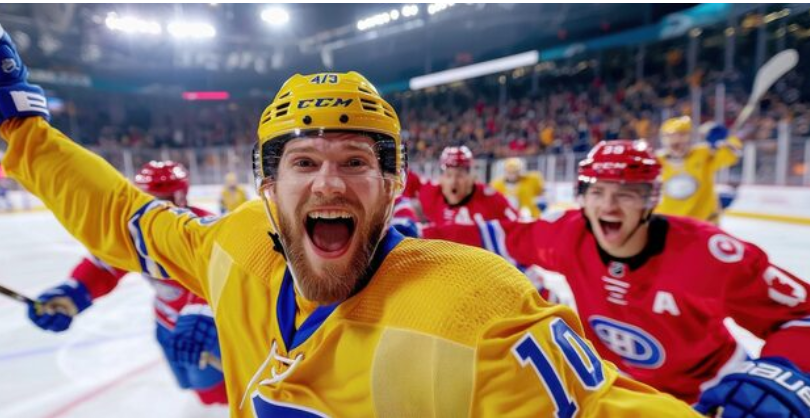
Almost nonchalantly, the puck moved across the blue line in overtime before exploding after decades of waiting and smashing into the back of the net. The United States men’s hockey team fell into a heap of red, white, and blue relief as sticks flew and helmets ricocheted off the ice in that brief moment. It was the United States’ first men’s hockey Olympic gold since 1980.
Just that fact is significant. For four and a half decades, the “Miracle on Ice” has been reenacted in patriotic montages and shaky video. However, this most recent triumph, which was achieved in Milan against a formidable Canadian team, seemed unique. Not a miracle. earned.
| Category | Details |
|---|---|
| Event | Olympic Games – Men’s Ice Hockey Gold Medal Game |
| Winning Team | United States men’s national ice hockey team |
| Opponent | Canada men’s national ice hockey team |
| Final Result | USA def. Canada (Overtime) |
| MVP Performance | Connor Hellebuyck – 41 saves |
| Historic Comparison | Miracle on Ice |
| Official Olympic Site | https://olympics.com |
“U.S.A.” chants from American spectators created a harsh, metallic boom that bounced off steel rafters within the arena. The red-draped Canadian fans stood in disbelief, some of them gazing at the ice as though they were waiting for a replay that might change the course of events.
Connor Hellebuyck, who made 41 saves that evening, appeared more like a man who had just finished a marathon while wearing goalie gear than a superman. As teammates banged on his helmet, sweat trickled down his face. It’s possible that none of this would occur in his absence.
Canada dominated extended periods of play by expertly cycling the puck. The United States quickly and systematically reacted, taking advantage of short-term weaknesses. The overtime goal was the result of patience—the kind developed over years of near-misses—rather than anarchy.
It seemed as though the players were aware of the historical shadow that hung over them as they skated their victory lap. Lake Placid wasn’t this. These were not world-shocking college students. These were top-tier experts taking on their most formidable opponent head-on. Nevertheless, they succeeded.
The rink was not the end of the festivities. The team made an appearance at President Donald Trump’s State of the Union address in the U.S. Capitol two nights later. Lawmakers stood in a long ovation, gold medals glittering in the chamber lights. Trump pointed at the players sitting on the balcony and said, “Our country is winning again.”
The athletes’ transformation into symbols just minutes after leaving the rink was an eye-opening sight. Politics and sports frequently collide, but not always this rapidly. To turn a goalie performance into a civic accolade, Trump even declared his intention to present Hellebuyck with the Presidential Medal of Freedom.
When Washington and athletics mix, there’s a certain element of uncertainty. Questions concerning optics and taxpayer optics were raised by FBI Director Kash Patel’s locker-room celebration in Milan, which provoked criticism at home. He was shown smiling and splattering champagne with players in the social media videos. It was deemed improper by Democrats. It was dubbed patriotism by Patel.
Whether the political fallout will last longer than the game itself is still up in the air. The players, however, continued to concentrate on hockey despite the physical strain of dealing with Canada’s constant attack, the rigors of 18 days in Milan, and the 24 broadcasts for commentators like Kenny Albert.
Albert compared the Stanley Cup Finals and even a Super Bowl broadcast to the final, describing it as “surreal.” The way the game got tighter with each move demonstrated that magnitude. Every faceoff was burdensome. Every wasted opportunity remained.
The larger hockey community will probably argue over how this victory compares to other American victories. It didn’t have the 1980 Cold War drama, but maybe it didn’t need it. Just rivalry was sufficient. The perseverance that went into this accomplishment is what gives it resonance. Olympic competitions without NHL players felt lacking for years. The greatest faced the best this time. No asterisks. No exclusions.
After the final whistle, supporters stayed outside the arena in the chilly Milan night, reliving the overtime goal on their phones and draping flags around their shoulders. Not everyone was old enough to recall 1980. Others have strong memories of it.
It seems as though this gold medal marks the end of one chapter and the beginning of another. Canada will never forget this defeat, and the U.S.-Canada enmity is still very strong. This overtime moment will serve as fuel for future competitions.
However, the wait was over for one night, and possibly for a generation of American players. The line was crossed by the puck. There were ripples in the net. History changed a little. Hockey felt timeless again, louder than controversy, and bigger than politics in that fleeting, frozen moment.