Arguments about civil rights, taxes, and wars have taken place on the benches of Parliament. By 2027, they would have to deal with a much odd question: can an artificial intelligence system be regarded as a legal “person” that is not human? unconscious. but responsible.
Quietly, the conversation has been developing. Lawmakers are starting to face a real-world conundrum as AI systems draft contracts, oversee portfolios, identify diseases, and even handle corporate operations. Who exactly is in charge when an autonomous machine, acting without direct human guidance, makes an expensive decision? This might have more to do with danger than with rights.
Important Information Table
| Category | Details |
|---|---|
| Issue | Proposed Legal Personhood / “Digital Entity” Status for AI |
| Legislative Focus | Liability, accountability, autonomous systems |
| Key Framework | European Union AI Act |
| Debate Timeline | Full regulatory phases between 2026–2028 |
| Core Question | Should AI systems have limited legal personality similar to corporations? |
| Current Status | No jurisdiction formally recognizes AI as a legal person |
| Main Concern | Closing liability gaps in autonomous decision-making |
| Reference | https://eur-lex.europa.eu |
The argument is not about giving AI civil liberties or the ability to vote. A more technical topic has taken center stage: legal personality as a tool. Some academics contend that AI systems might need a fictional status like to that of businesses, which are entities that exist on paper but have assets and responsibilities. Lawmakers seem to be attempting to close a gap that is getting wider.
Risk categories and supervision procedures are highlighted in the European Union’s AI legal framework, especially the European Union AI Act. Personhood is not conferred by it. However, its gradual rollout from 2026 to 2028 is compel more in-depth discussions over liability arrangements.
Hearings on AI governance in London have seen an increase in the number of people in committee rooms. Scholars of law move printed briefs around. Neural networks are described by technologists in measured tones. While tourists take pictures of Big Ben outside, politicians are discussing whether software may be legally protected within.
Consider a financial system powered by AI that makes trades that cause market instability. or a self-governing supply chain instrument that violates sanctions regulations. Liability is frequently attributed to developers, deployers, or operators by current frameworks. Yet, pinning accountability becomes more difficult as systems learn, adapt, and optimize themselves.
Investors appear to think that market stability would result from clarity. Critics are concerned about moral hazard at the same time. Giving AI a legal personality could absolve businesses of responsibility by enabling them to blame “the algorithm” for poor actions. It is evident that some lawmakers are uncomfortable with that possibility. Whether limiting digital personhood would cause more issues than it would solve is still up for debate.
There are philosophical overtones to the argument as well. Last October, when passing demonstrators outside Parliament, one might hear conflicting chants: some calling for protections against unaccountable automation, while others warned of “machine rights gone mad.” It seems as though society is renegotiating its relationship with its own inventions as we see this play out.
The term “digital entity status” comes up a lot during committee hearings. The idea wouldn’t put AI on par with people. Rather, it might simplify accountability in the event of harm by permitting some systems to own property, carry insurance, or be sued.
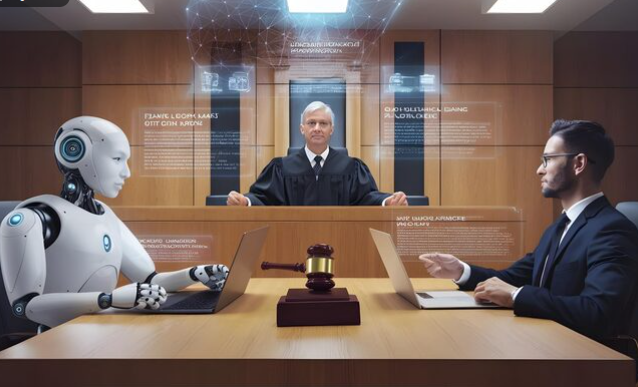
Legislators may interpret this as containment rather than empowerment. Governments may be able to stop the never-ending litigation between individuals and companies by granting structural liability to AI entities. The optics, however, are delicate. The public’s confidence in digital firms is already eroding, particularly when automation changes how people work and make decisions.
Parallels to history linger in the backdrop. Centuries ago, the decision to grant businesses legal personhood was administrative rather than philosophical. However, as time went on, corporate rights grew in unexpected ways. People believe that lawmakers are being cautious since laws tend to change from what they were intended to do.
AI adoption is accelerating in the meantime. Predictive models are used by financial firms. Diagnostic algorithms are integrated into healthcare systems. Autonomous routing is essential to logistics companies. According to recent statistics, more than 75% of major financial services companies currently use AI in some way. Technology advances more quickly than laws. Lawmakers also find it difficult to keep up.
Regulators and judges have started to question whether the current frameworks are sufficient. Some contend that obligatory insurance and improved oversight might close liability gaps without conferring personhood of any kind. Others respond that certain autonomous systems are in ambiguous areas since they lack legal standing.
Whether Parliament will accept even limited digital entity status by 2027 is still up in the air. The debate itself appears to be a turning moment, which is more certain. AI is no longer only considered a tool. It is starting to play a role in the legal and economic systems, affecting large-scale choices.
One cannot help but feel that the debate taking place inside Westminster is more about human responsibility than it is about robots as they stand outside at dusk with the lights shining off the Thames. It won’t be because robots wanted it if Parliament decides to discuss legal personality for AI entities by 2027. The reason for this is that humans require a structure to oversee the creations they have made.