Many Silicon Valley residents are keeping a closer eye on a construction project in Yongin, an hour south of Seoul, than they would likely like to acknowledge. It’s the first stage of SK Hynix’s enormous new semiconductor complex, which will eventually generate the memory chips needed to enable large-scale AI computing. You can see cranes for miles. And someone is attempting to figure out how to get a claim on what comes out of it somewhere in the corporate offices of Alphabet, Meta, Microsoft, and at least a few other companies whose names haven’t been revealed yet.
According to a Reuters story from last week, SK Hynix has received an unprecedented number of investment offers in a sector that isn’t exactly known for sentimentality. Large international tech companies have suggested financing specialized production lines. Some have offered to assist with financing the purchase of ASML’s sophisticated Dutch-made devices, which can cost hundreds of millions of dollars each and print circuits onto silicon wafers. According to one source, the offers are unprecedented in the memory chip industry. For its part, SK Hynix is exercising caution. The business does not wish to be restricted to a single customer. According to one person familiar with the situation, it doesn’t want to support the wrong horse in the AI race. It’s also important to note that there isn’t anything to offer at this time. According to a source who spoke to Reuters, “available capacity is essentially zero.” There is a rush for chips that aren’t yet available.
| Company Name | SK Hynix Inc. |
| Headquarters | Icheon, Gyeonggi Province, South Korea |
| Founded | 1983 (as Hyundai Electronics; rebranded SK Hynix in 2012) |
| Parent Company | SK Group (South Korea’s second-largest conglomerate) |
| Industry | Semiconductor manufacturing — DRAM, NAND flash, High Bandwidth Memory (HBM) |
| Market Position | Asia’s third-most valuable firm by market cap, after TSMC and Samsung |
| Share Price Performance | Up 154% year to date as of May 2026 — record high |
| Primary Competitors | Samsung Electronics, Micron Technology |
| Key Product (AI Focus) | High Bandwidth Memory (HBM) chips — critical for AI data centers |
| Global Market Context | Memory chip shortage persisting; both SK Hynix and Samsung report “structural growth” in AI demand |
| Current Capacity Status | “Available capacity is essentially zero right now” — company source |
| New Facility Under Construction | Yongin Semiconductor Cluster, South Korea (large-scale DRAM fabrication plant) |
| Manufacturing Equipment | Buyer of ASML extreme ultraviolet lithography machines (each worth hundreds of millions of dollars) |
| Long-Term Contracts | Exploring multi-year supply agreements with price-band mechanisms and 30–40% upfront prepayment structures |
| Worker Bonus Policy | First major Korean company to allocate 10% of operating profit as employee bonus fund — now being replicated across Samsung, LG, Kakao, and others |
| Intel Deal (Reported) | SK Hynix reportedly considering using Intel’s packaging technology for HBM chips |
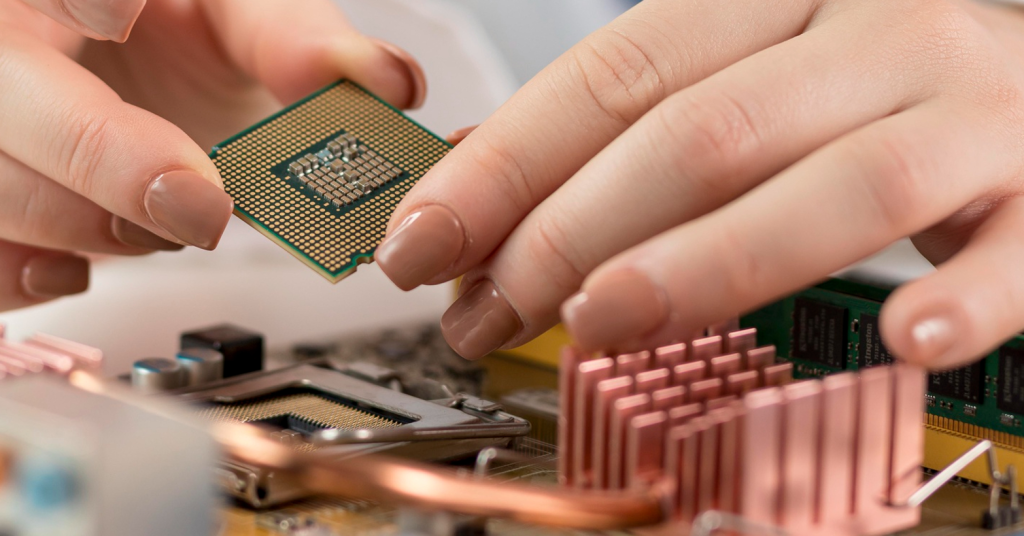
From a supply-side perspective, the AI boom looks like this. The businesses constructing data centers—Microsoft stated that capital expenditures would reach $190 billion this year, and Meta declared it was “investing aggressively” throughout the supply chain—need memory chips in quantities the industry has never been asked to produce. AI accelerators rely on a specific product called high bandwidth memory (HBM), of which SK Hynix is the top supplier. Its shares have reached a record after rising 154 percent so far this year. The market’s perception of what is taking place here isn’t particularly nuanced.
It’s difficult to ignore how nearly structurally awkward SK Hynix’s current position is. The company is navigating a domestic labor situation that has become a national conversation in South Korea while being courted by the world’s most powerful technology companies. The first significant Korean business to agree to set aside 10% of operating profit as a worker bonus fund was SK Hynix last year. At the time, this action appeared to be a practical reaction to employee pressure. It turned into a template. These days, unions at Samsung Electronics, Samsung Biologics, LG U+, and Kakao are advocating for their own versions, which range from 10 to 30 percent of operating profit. Despite several mediation sessions, Samsung’s labor negotiations are still unresolved. This week, the Korea JoongAng Daily revealed that South Korea’s Blue House policy chief has even proposed a “public dividend”—that is, distributing the record profits of SK Hynix and Samsung to the general public, citing decades of domestic industrial investment as the foundation for these gains. Regardless of one’s opinion of that argument, it’s amazing to see a private semiconductor company brought up.
In the past, the memory chip industry has been harsh, with cycles of excess supply followed by agonizing corrections and billions of dollars’ worth of investments that could be lost in a single negative market turn. A tight oligopoly made up of Samsung, SK Hynix, and Micron has controlled those cycles in part by limiting supply and in part by covering losses when the market shifts. Executives at all three companies claim that the perception that AI demand will not follow a typical cycle is what has changed. They contend that the current shortage is a structural issue with the way data centers must be constructed and expanded rather than a passing fad. Because of this belief, multi-year supply contracts—which were previously uncommon in this sector—are now being negotiated with legally binding terms, price floors and ceilings, and sizable upfront prepayments.
According to reports, Intel is in talks to package high bandwidth memory chips with logic dies using SK Hynix’s technology. This would strengthen ties between the two businesses and provide another prominent anchor for Intel’s struggling foundry division. Riding the same wave of AI infrastructure, Intel’s stock has increased by more than 220 percent so far this year. Meanwhile, construction on the Yongin complex in South Korea continues. It may be more important than most people outside the semiconductor industry currently realize what it produces when it opens and who gets first claim on it.