The vans are not subtle. On a busy weekday afternoon, a white car wearing police insignia is parked along the curb at Oxford Circus or Stratford Westfield. It has cameras installed at about head height and signs alerting onlookers to the use of live facial recognition. The majority of individuals pass past the scan area without noticing it. Some take note and pick up the pace.
Some people stop to read the sign’s small text. Thousands of faces have been compared to a database of wanted people in a matter of minutes, and the majority of those scans—by the Met’s own figures—produce no match, and the photos are immediately erased. That’s the technical description of the current situation in London. The political version is more disorganized.
| London Facial Recognition Rollout — Key Information | Details |
|---|---|
| Technology | Live facial recognition (LFR) |
| Deploying Force | Metropolitan Police |
| Met Commissioner | Sir Mark Rowley |
| London Mayor | Sadiq Khan |
| High Court Outcome | Challenge rejected |
| Lead Claimants | Shaun Thompson (youth worker), Silkie Carlo |
| Campaign Group | Big Brother Watch |
| Misidentification Year | February 2024 (Thompson stopped after false match) |
| Total Arrests Using LFR (Since 2024) | About 2,100 |
| Faces Scanned in 2025 | Over 3 million |
| False Alerts Recorded | 12 (none leading to arrest) |
| Number of LFR Vans Currently | 10 |
| Planned Expansion | Up to 50 vans across England and Wales |
| Policy Driver | UK Home Office initiative |
| Reference Reporting | BBC News and The Guardian |
The High Court’s decision earlier this year marked a significant change in the legal development of face recognition in the United Kingdom. Silkie Carlo, the director of Big Brother Watch, and Shaun Thompson, a youth worker, had filed a challenge, claiming that the Met’s use of live face recognition violated privacy and human rights laws.
In a 74-page decision, Lord Justice Holgate and Mrs. Justice Farbey dismissed the allegations. The judges concluded that Thompson and Carlo’s rights had not been violated and that the possibility of racial discrimination had been “no more than faintly asserted.”
The decision was hailed by the Met as a major win for public safety. Thompson has stated he plans to file an appeal, and the activists referred to it as the beginning of a lengthy battle.
Now, City Hall is under further pressure. Given that the Home Office has announced plans to increase the number of LFR vans from 10 to 50 throughout England and Wales, civil liberties organizations, legal scholars, and a number of members of the London Assembly have openly encouraged Mayor Sadiq Khan to adopt a more transparent stance on the implementation.
In his position managing the Met through the Mayor’s Office for Policing and Crime, Khan has traditionally attempted to take a moderate stance on matters of law enforcement, emphasizing equality and community trust while endorsing police numbers and visible patrols.
A sharper decision is required by the facial recognition question. The mayor either publicly supports the Met’s growth or uses a force for which he is structurally responsible to generate political daylight.
This is an extremely challenging discussion in part because of the numbers associated with the deployment. The Met has reported almost 2,100 arrests utilizing live facial recognition since the beginning of 2024. Over three million faces were captured by the cameras last year; twelve false alarms were recorded, but none of them resulted in an arrest. These error rates are quite low by automated surveillance system standards.
These numbers have been cited by proponents of the implementation, such as Policing Minister Sarah Jones, as proof that the system is accurate enough to support growth. Critics contend that the idea of applying mass biometric scanning to those who have not committed any crimes is more significant than the total number of false alerts.
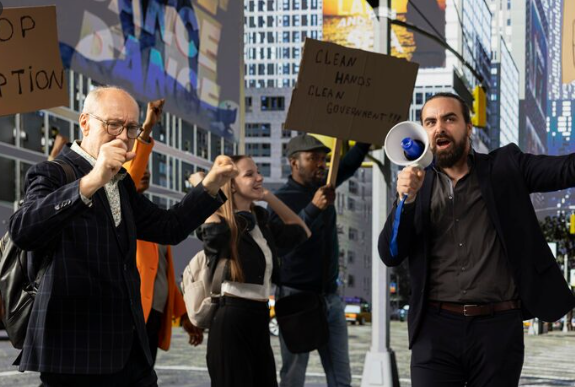
Thompson’s personal story highlights the discrepancy between the policy discussion and the real-life reality of an individual misidentification. He was stopped, arrested, and interrogated in February 2024 when the system linked him to his brother, who was then out on bail for an alleged violent crime.
Even showing his identification and bank cards did not instantly persuade the cops that the algorithm had erred, according to Thompson, who described the encounter as startling and unjust. That detail has a unique meaning. In front of police officers, the technology’s confidence outweighed the documentary proof, and Thompson had to disprove the system rather than rely on it to validate itself.
The aspect of the proposal that has most alarmed civil rights organizations is the Home Office’s January plan to expand to 50 vans throughout England and Wales. One type of policy is a few vans running in central London. A structurally distinct type of monitoring regime is a national fleet that is accessible to all police departments and scans large gatherings nationwide.
This is the form of technology, according to critics, that starts to undermine the viability of an unmonitored public life. Proponents contend that the public generally accepts the trade-off, the courts have made decisions, and the Met has shown low error rates.
You can see how technology has already blended into the fabric of the city when you stroll through any major transportation hub in London on a Friday night. The majority of Londoners are undecided about their feelings on the cameras. Before returning home, they walk through three more scans after noticing the vehicles and then forgetting about them.
Speaking with individuals on both sides of the argument gives me the impression that the political discourse hasn’t fully caught up with the realities of everyday life. The deployment is proceeding more quickly than the politics, but the mayor’s final stance will be important.
The question that no one has really answered is whether that speed eventually slows down or if London just becomes the most scanned big Western city without a sustained public debate about what it implies.