On a Tuesday night, the audience is more noticeable than the music when you’re standing in the back of a Daniel Caesar performance. During “Best Part,” couples lean toward each other as they had done for almost ten years. It’s becoming less common to see twenty-somethings enjoying concerts with their phones mostly turned off.
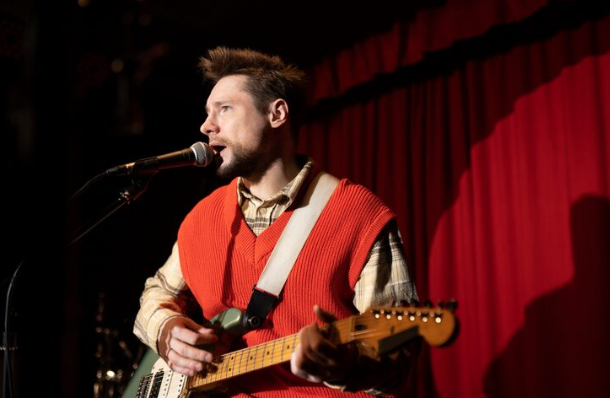
When he moves to the front of the stage and begins a song without an introduction, a certain silence descends upon the audience. The Son of Spergy Tour, which takes its name from his 2025 album of the same name, has been performing in North American and European venues for a number of months. Over time, the set list has evolved into something that is both novel and recognizable.
| Daniel Caesar — Son of Spergy Tour 2026 Information | Details |
|---|---|
| Artist | Daniel Caesar |
| Real Name | Ashton Simmonds |
| Hometown | Oshawa, Ontario, Canada |
| Tour Name | Son of Spergy Tour |
| Anchoring Album | Son of Spergy (2025–2026) |
| Previous Major Albums | Freudian (2017), Case Study 01 (2019), Never Enough (2023) |
| Common Opener | “Rain Down” |
| Notable New Tracks Performed | “Have a Baby (With Me),” “Call on Me,” “Emily’s Song” |
| Career Anthems Featured | “Get You,” “Best Part,” “Japanese Denim,” “Always” |
| Reimagined Older Tracks | “Superpowers,” “Cyanide” |
| Setlist Resource | Setlist.fm |
| Themes | Faith, identity, fatherhood, doubt, romantic memory |
| Production Style | Stripped-back band arrangements with full vocals |
| Reference Source | Pitchfork tour coverage |
| Standard Show Length | Roughly 90 to 110 minutes |
Looking at recent setlists from places like Toronto, Brooklyn, and Atlanta, you can see that the show’s structure makes sense. He begins with “Rain Down,” a song off the new album that serves as both a declaration of intent and a plea.
Son of Spergy’s songs, such as “Have a Baby (With Me),” “Call on Me,” “Emily’s Song,” and “Baby Blue,” which revolve around themes of parenthood, faith, and the kind of calm adult tenderness that his earlier music touched on but didn’t completely center, are heavily included in the first part of the program. The album’s title, which alludes to a particular childhood memory, establishes the tone for a tour that is more autobiographical than any of his earlier releases.
The catalog opens in the middle of the performance. Every night, the band reimagines “Superpowers,” from Never Enough, sometimes making it simpler and other times making it more intense. “Cyanide” always lands with a restless intensity. The audience’s reaction to “Japanese Denim” is the kind of instant recognition that indicates the song has become a standard part of the list of modern R&B classics.
Observing how these older songs complement the more recent releases gives the impression that Caesar has managed to play his own discography without making it seem like a greatest-hits exercise. It is framed in an autobiographical manner. “Always” is one of the show’s more emotionally vulnerable moments, and it usually falls in the rear third. The songs are chapters.
Caesar’s voice has aged into the song, making the words feel more like a mature man’s memories than a young man’s confession. As a result, the song’s quiet desperation reads differently now than it did when it initially came out. No matter which city the show is in, “Best Part” always shows up at some point—often more into the set than fans might anticipate—and the audience’s response never really shifts.
“Get You” nearly always ends the night. There’s a certain portion of the song where the audience sings the second verse louder than he does, and he lets it happen. For years, Caesar has ended performances with this song, which has a community singalong gravity that few modern R&B tracks have been able to maintain.
Compared to the studio recording, the tour version is a little slower, longer, and more conscious of its position as a closing number. There’s a sense that the song has grown beyond the artist’s connection to it as you see it land in real time. He performs it as you would expect a musician to perform something that the audience has determined is equally theirs and his.
More attention should be paid to the Son of Spergy content itself than is typically done in tour coverage. Songs like “Touching God,” “Sign of the Times,” “No More Loving (On Women I Don’t Love),” and “Sins of the Father” occupy a specific emotional register and deal with issues of theological doubt, romantic responsibility, and the burden of inherited identity.
Although Caesar has been heading in this way for years, Son of Spergy is the record where he gives it his all. These songs’ live performances feel more like declarations of the artist’s true status in 2026 than they do like crowd-pleasers.
It’s difficult to ignore how the R&B scene has changed in the modern era. Frank Ocean has virtually completely stopped going on public tours. SZA performs in stadium-sized shows that are more pop-oriented than R&B. The Weeknd has made a significant transition into stadium spectacle.
Caesar, on the other hand, has remained in theaters and medium-sized venues, kept the production simple, and allowed the songs to take center stage. From the rear of any of these rooms, the Son of Spergy Tour seems like a tiny wager against the dominant economic logic of his genre.
The next album cycle will likely provide an answer to the question of whether the wager ultimately pays off. For now, the songs land as intended, the audience shows up, and the set list keeps together.