You are in the middle of a market structure that the plaintiffs in this case spent years arguing was purposefully anticompetitive when you stand at an ATM outside a convenience store or inside an airport terminal. These are the ones that flash a $3.50 or $4.00 surcharge notice before asking you to confirm, knowing full well that you will accept because you need the cash and there is no competing machine nearby. Not by chance. Not a given. intentionally set up to give you no real option, charged at a rate that the banks and networks had coordinated, and revealed just enough information to avoid being obvious fraud. In order to settle such claims, Visa and Mastercard have now agreed to pay $197.5 million.
One of the longest-running financial services antitrust disputes in recent American legal history is the ATM fee class action. Anyone who routinely used ATMs in the United States during the last 15 years may have a stake in the decision, as the class period alone covers roughly seventeen years, from October 1, 2007, to July 26, 2024. The main accusation was that Visa, Mastercard, and a number of the biggest banks in the nation colluded to set ATM access costs at artificially high levels, using their network regulations to keep competitive pressure from lowering those rates. That kind of coordinated arrangement among competitors is exactly what the Sherman Act was intended to forbid under federal antitrust law.
| ATM Fee Class Action — Settlement Overview | |
| Total Settlement Fund | $197.5 million — combined settlement from Visa ($104.675M) and Mastercard ($92.825M); resolves claims of unlawful ATM surcharge conspiracies in violation of federal antitrust law |
|---|---|
| Core Allegation | Plaintiffs alleged that Visa, Mastercard, JP Morgan Chase, Wells Fargo, and Bank of America conspired to charge unlawful surcharges on ATM transactions — argued to constitute an anticompetitive arrangement violating federal antitrust statutes |
| Class Period | October 1, 2007 through July 26, 2024 — anyone who paid an unreimbursed ATM access fee at a JP Morgan, Wells Fargo, Bank of America, or Visa/Mastercard network ATM during this period may be eligible |
| Prior Bank Settlements | JP Morgan Chase, Wells Fargo, and Bank of America previously settled for a combined $67 million — the Visa/Mastercard settlement is in addition to, not instead of, those prior payouts |
| Visa Contribution | $104.675 million — the larger of the two network contributions; Visa operates the largest ATM network among the defendants named in the original class action |
| Mastercard Contribution | $92.825 million — Mastercard’s settlement share; combined total with Visa reaches $197.5 million, bringing the overall resolution including prior bank settlements to approximately $264.5 million |
| How to Claim & Who Qualifies | |
| Who Is Eligible | Individuals and entities that paid unreimbursed ATM access fees directly to JP Morgan Chase, Wells Fargo, Bank of America, or any bank that is a member of the Visa and/or Mastercard ATM networks between Oct. 1, 2007 and July 26, 2024 |
| Previous Claimants | Class members who already filed and received payment from a prior settlement in this case do not need to refile — they will automatically receive payment based on their previously submitted information |
| Additional Charges | Previous claimants who incurred additional ATM surcharges after their initial filing can submit a new claim form covering the newer charges — CFPB guidance on ATM fees may help document claim amounts |
| Payment Estimates | No individual payment estimates are currently available — final per-person amounts depend on total valid claims submitted against the fund; distribution details will be confirmed after the claims process closes |
JP Morgan Chase, Wells Fargo, and Bank of America, the institutions mentioned in the initial lawsuit, had previously paid a total of $67 million to resolve their share of the case during previous stages of the legal proceedings. With the $197.5 million settlement, Visa and Mastercard, the two payment networks whose agreements and regulations were crucial to the establishment and enforcement of ATM fee policies, have finally settled their own liabilities. Mastercard will provide $92.825 million, while Visa will contribute $104.675 million. When the previous bank settlements are added, the total financial settlement for all defendants comes to about $264.5 million. Depending on how you consider the volume of ATM transactions that occurred over seventeen years and hundreds of millions of customers, this amount may seem substantial or modest.
This case has a lengthy history and two distinct claim-filing periods, so the details of who qualifies and what they must do are actually crucial. During the class period, anyone who paid an unreimbursed ATM access fee at a machine run by or connected to JP Morgan Chase, Wells Fargo, Bank of America, or any bank that takes part in the Visa or Mastercard ATM network may be eligible. Since Visa and Mastercard together account for the great majority of ATMs in the US, the qualifying class is relatively huge, making it difficult to predict the dividend per person after the funds are divided. Until the claims process concludes and the administrators are able to determine the actual distribution, individual payment estimates will not be provided.
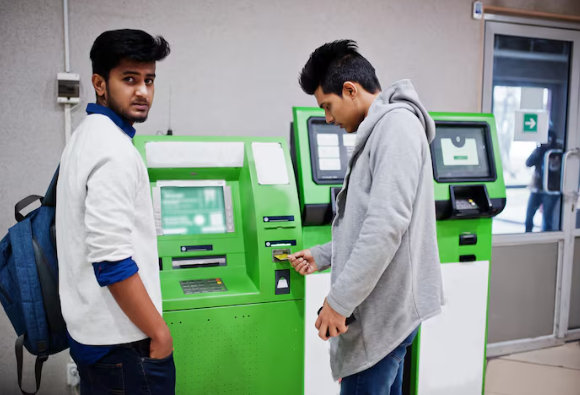
There is a simple solution for those who have already submitted a claim and been paid by one of the previous bank settlements in this instance: you do not need to submit a new claim. Using the details you previously provided, the settlement administrator will automatically process a payment. You may submit a supplemental claim to cover any extra ATM surcharges you incurred after filing your initial claim, that is, during the time after your initial submission but still within the class period.
There is something about the larger picture here that merits recognition. For many years, ATM fees have been a minor annoyance in American consumer finance, but they have also been viewed as just the expense of using your own funds; they are inevitable, accepted, and hardly worth registering. The fact that a group of plaintiffs were able to successfully claim that the fee structure was the product of anticompetitive coordination, that the litigation continued for years with several defendants, and that settlements totaling more than a quarter of a billion dollars were obtained indicates that the annoyance was not unjustified. The market wasn’t only pricey. According to the legal view, it was purposefully designed to remain that way since several defendants opted to settle rather than battle to a verdict.
It’s difficult to ignore the fact that each claimant’s final payout is probably going to be small—a few dollars, maybe more, depending on how often they used ATMs and whether they have proof of the fees. Financial alleviation for individuals is essentially irrelevant. The settlement serves as both a financial burden for the businesses that constructed and maintained the building and a legal record that it was contestable.