Opening the Uber app in a bustling metropolis creates a certain sense of expectation. For a little while, everything seems predictable as the anticipated time updates and the small automobile icon glides across the map. However, beneath that straightforward interface, a more intricate process is taking place, which investors appear to be observing once more.
Uber’s stock, which is currently trading in the mid $70s, has lately increased by more than 5%. This increase feels more like a change in sentiment than a surge. This kind of movement indicates that the story may be shifting for a corporation that has spent years battling concerns about sustainability, profitability, and regulations. or changing, at the very least.
Key Information About Uber Technologies (UBER)
| Category | Details |
|---|---|
| Company | Uber Technologies Inc. |
| Stock Ticker | UBER |
| CEO | Dara Khosrowshahi |
| Headquarters | San Francisco, California, USA |
| Founded | 2009 |
| Current Price | ~$78–$79 |
| Market Cap | ~$160+ Billion (approx.) |
| Recent Performance | +5% surge in March 2026 |
| Key Strategy | Autonomous vehicle partnerships |
| Major Partners | Nvidia, Zoox, Wayve, Motional |
| Core Business | Ride-hailing, delivery, logistics |
| Official Website | https://www.uber.com |
Uber’s increasing interest in autonomous vehicles is partially responsible for this shift. The company’s approach is intriguing, though. Uber is not attempting to develop its own self-driving technology from the ground up, in contrast to Tesla or Waymo. Rather, it is presenting itself as the marketplace—the foundation on which autonomous fleets will eventually function. It’s a more subdued approach, but it might be more adaptable.
Investors seem to be becoming more receptive to this strategy. Uber is attempting to remain at the center of the mobility ecosystem without bearing the entire cost of technology advancement, as evidenced by its partnerships with firms like Nvidia and Zoox. Uber appears to be thinking worldwide rather than experimenting in limited locations, as seen by the use of Nvidia’s AI tools to extend operations across various cities.
However, the optimism is accompanied by reluctance. Whether autonomous car developers will eventually work with Uber or compete with it is still up in the air. Businesses constructing their own robotaxi networks may choose they don’t require a middleman. This likelihood continues to influence analysts’ perceptions of the stock.
You may witness the latest iteration of Uber in action when strolling around a city like San Francisco or London: drivers waiting at curbs, customers checking their phones, packages showing up at doorsteps. Although the system functions, a significant amount of human labor is required. If they grow as anticipated, autonomous cars have the ability to completely alter that equation, cutting expenses and possibly boosting profits.
However, such change won’t occur right away. Technological capabilities and practical application are not aligned. Public trust, infrastructure, and regulations will all have an impact on how quickly autonomous services proliferate. Uber’s approach, which strikes a balance between present operations and potential future developments, appears to recognize this.
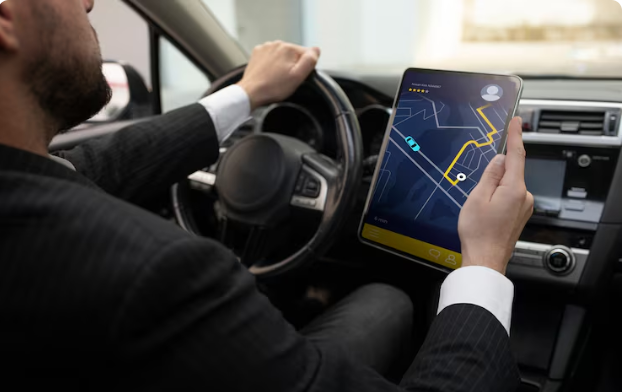
The recent rebound in the stock is also indicative of more general market conditions. Uber was under pressure earlier in 2026 as worries about expansion and competition affected the company’s profitability. Some of those worries appear to have subsided, at least momentarily, based on the recent rebound. Investors appear to think that the corporation has discovered a more obvious course of action.
The way Uber fits into the broader tech scene is intriguing. Uber operates in the real world, in contrast to businesses that are solely focused on software or hardware. Real-world limitations apply to actual factors such as cars, roads, drivers, and passengers. As a result, the company is both more intricate and, in some respects, more grounded.
It’s difficult to ignore how the business has developed. Uber was frequently linked to controversy and disruption in its early years, breaking limits in ways that drew criticism as well as attention. The tone seems different now. more methodical and execution-oriented than growth at all costs.
Competition hasn’t vanished, though. As Waymo grows its own robotaxi services, Tesla keeps advancing its autonomous driving goal. Although these businesses use distinct business strategies, they have significant connections to Uber’s goals. This competition’s result is still up in the air.
Additionally, there is the issue of valuation. Uber’s stock, at about $78–$79, isn’t as expensive as some high-growth tech companies, but it’s also not cheap in the conventional sense. Particularly in autonomous mobility, investors are pricing in both present performance and future potential.
There is a sense that Uber is about to enter a transitional phase based on the movement of the stock. Ride-hailing and delivery, the company’s main operations, offer stability and steady demand. However, automation, efficiency, and scalability are becoming more important aspects of the future. It remains to be seen if that shift goes successfully.
The market’s perception of Uber is slightly tense. On the one hand, it’s a tried-and-true platform with a global reach. However, for its next significant advancement, it is reliant on outside partners. Opportunity and risk are introduced by this dependence.