The first thing that struck everyone about the Golden Hind was how confidently it stood against the skyline of the harbor. Its tall masts rose like raised hands, telling stories that were very clear even before a word was spoken.
For decades, it told stories without saying a word. Its wood creaked softly in the wind, reminding visitors that exploration used to depend solely on bravery, instinct, and ships that were very strong even under unimaginable stress.
Key Facts About Brixham Golden Hind
| Category | Details |
|---|---|
| Location | Brixham Harbour, Devon, England |
| Type | Full-size replica of Sir Francis Drake’s Golden Hind |
| Historical Inspiration | Original ship circumnavigated the globe from 1577 to 1580 |
| Role in Brixham | Major tourist attraction and educational experience |
| Special Experiences | Tours, school visits, and overnight cabin stays |
| Years Under Recent Operators | Eight years |
| Closure Announcement | February 14, immediate closure confirmed |
| Community Impact | Cultural landmark with strong emotional and economic importance |
| Future Status | Update expected from operators |
Landmarks in coastal towns often become emotional anchors, holding memories in place while everything else changes. The Golden Hind did this very well, shaping Brixham’s identity with its steady, reliable presence.
Kids of all ages were drawn to it by a sense of curiosity that was eerily similar across generations. Their footsteps quickened as they got closer to a structure that promised discovery, imagination, and something surprisingly personal.
People often imagined the original ship commanded by Sir Francis Drake when they stood next to the vessel. Drake’s journey around the world changed people’s confidence in their country and showed that people could push their limits even further.
The replica turned that accomplishment into something very useful. It turned distant history into a real experience by letting visitors move through narrow hallways and touch surfaces that echoed a past that was otherwise out of reach.
The ship’s role has grown a lot over the past ten years. It now offers overnight stays that combine historical immersion with modern comfort. This made for an experience that was surprisingly cheap compared to international travel but priceless in terms of emotions.
In the late afternoon, visitors boarded the ship and watched the harbor change color as night fell. They could hear the ropes tighten and loosen with the tide, which made the attraction feel very new for a historical site.
With careful planning, the operators turned the ship into a very effective learning space that could accommodate school groups and families. This made operations more efficient and satisfied people’s curiosity in ways that textbooks alone could never do.
Teachers said the experience was very effective because they saw students become more interested in history just by being there instead of passively reading about it.
On February 14, operators confirmed that the Golden Hind had closed right away. They said the decision was made by forces outside of their control, which left a silence that was heavier than anyone had expected.
In the last few days, residents reacted with concern that felt very personal. Their responses showed how the ship’s presence had quietly changed daily life and community traditions.
One person who lived there talked about wedding pictures taken there, and their voice showed that the ship had become a part of the most important events in their lives, not just a background.
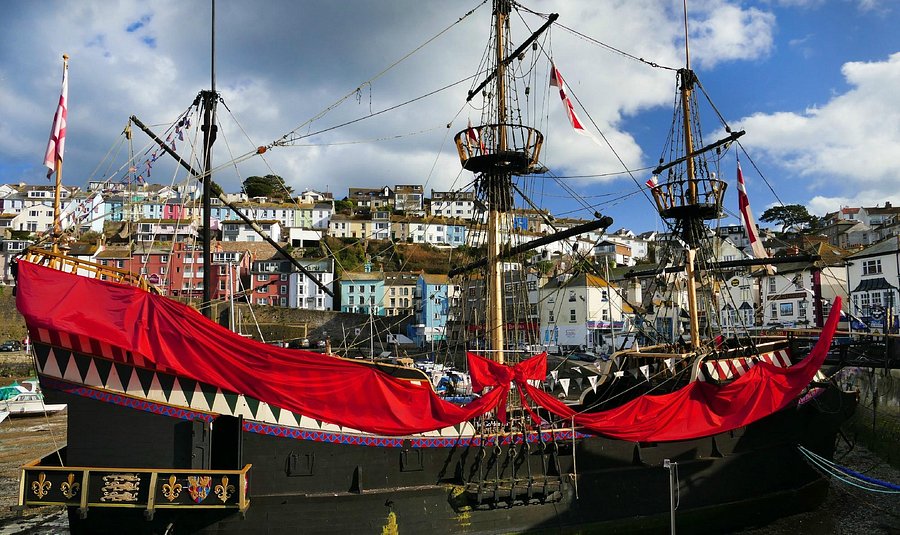
Another person talked about Pirate Weekend and how the event needed the ship to feel real. Now that the ship is gone, plans are up in the air and memories are more fragile.
I remember standing by the harbor wall years ago and seeing a child reach out to touch the ship’s railing. At that moment, I realized how easily history had connected with the present.
In the world of tourism, attractions often compete for attention. But the Golden Hind never had to ask for it; it drew people in naturally with its quiet authenticity and very high level of consistency.
The presence of economic energy spread outward, helping people make a living in ways that were rarely measured but were always felt.
Since modern overnight experiences began, visitor engagement has gone up a lot, which has helped Brixham’s reputation as a place where history and creativity can come together.
That difference creates a strange tension that shows how places get their meaning not just from their structure, but also from how people interact with each other and share experiences.
Ships naturally stand for movement and strength. They represent journeys that are defined by adaptation, persistence, and moving forward even when things are uncertain.
The story of the Golden Hind keeps changing. Its future may take some very creative forms in the next few years. It could reopen with new leadership or change its role again to meet new needs.
Communities often rediscover their landmarks in unexpected ways, and after a disruption, they learn to appreciate how important they are even more.