In the early mornings on Jersey’s narrow roads, things often happen quietly. Parents guide cars through tight corners, and cyclists move steadily along hedgerows, creating a rhythm that feels almost choreographed, as if everyone knows what to do without having to say anything.
But safety officials are becoming more and more aware of the problem. They know that drug-related impairment spreads through communities in ways that are very similar to hidden currents beneath still water: they are hard to see but definitely there.
| Category | Details |
|---|---|
| Location | Jersey, Channel Islands |
| Proposed By | Infrastructure Minister Constable Andy Jehan |
| Key Proposal | Legal cannabis driving limit and roadside drug testing |
| THC Limit | 5 micrograms per litre of blood |
| Current Penalties | Up to 1 year imprisonment or £10,000 fine |
| Enforcement Method | Roadside screening followed by formal police testing |
| Police Concern | Drug-driving now harder to detect than drink-driving |
| Public Debate | Concerns about fairness for medicinal cannabis patients |
| Legislative Stage | Awaiting debate by the States Assembly |
Over the past ten years, it has become much harder to enforce laws. This is mostly because traditional methods of observation, which were once thought to be very reliable, now have trouble telling the difference between fatigue, distraction, and chemical impairment with the level of certainty needed in courtrooms.
Andy Jehan wants to create a system that works like a well-coordinated network of sensors, with each officer providing information, analyzing signals, and responding quickly, like a swarm of bees protecting a shared hive. He does this by setting clear limits on cannabis and testing drivers on the side of the road.
This comparison seems very new because it shows how modern policing relies less on individual judgment and more on group verification. This makes decisions easier and frees up people’s time for more in-depth analysis and more careful action.
Roadside testing, which used to be rare and experimental, is now much faster and more effective. This means that officers can find out right away if someone is impaired instead of waiting days for lab confirmation that comes too late to protect people who are already in danger.
Officers can now collect preliminary evidence in just a few minutes by using portable detection tools. This makes the process feel very strong under scrutiny, which boosts confidence in the results while making sure that fairness stays at the heart of everything.
While talking to residents, I noticed that just the fact that there are tests changes how people make decisions, making them stop, think again, and act more responsibly before turning the keys in the ignition.
The suggested five-microgram limit is the result of careful calibration and is purposely set higher than in neighboring areas. This shows that the goal is to be both protective and especially considerate of people who need prescribed cannabis for medical reasons.
People who use medicine have expressed concern that following their prescriptions might still put them close to legal limits, which makes them feel uncertain and sometimes uneasy.
Officials have responded by saying that the higher limit was chosen to make sure that the rules stay surprisingly affordable in social terms, which will lower unintended penalties while keeping road safety as the main goal.
Since similar measures were put in place in other places, authorities have seen behavior patterns slowly change. For example, incidents of impaired driving have dropped significantly, showing how well clarity and enforcement can work together.
Jersey’s approach is a much better framework because it uses modern testing methods. This makes enforcement feel less random and more based on measurable, verifiable science.
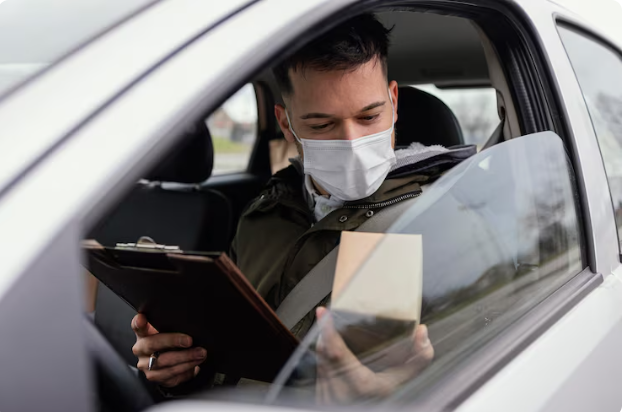
This change may seem like a matter of procedure, but it has far-reaching effects on public trust, personal responsibility, and the shared belief that safety depends on cooperation rather than punishment alone.
For police officers, roadside testing becomes a very useful tool that helps them make decisions faster and keeps people safe from harm that often comes without warning.
Over time, these reminders build up and change habits in ways that become almost automatic, directing behavior long before enforcement is needed.
The law also adds flexibility by letting future assemblies change the limits on other substances. This keeps the system flexible and especially responsive to new scientific knowledge.
Policymakers create laws that can change over time, which makes them relevant, credible, and very clear even when things change.
When enforcement is clear, consistent, and very trustworthy, people often change their behavior on their own, showing that they want to stay safe rather than fight authority.
Parents are the first to notice it when they watch traffic outside of schools and can tell when drivers are paying more or less attention and being more or less careful.
Cyclists also notice it, as they see that cars are passing with more patience and care.
These little changes add up over time, boosting confidence and building trust in public places.
I talked to a local driving instructor recently and realized how even small changes to the rules can change how people think about responsibility in their daily lives.
Authorities have started to put more emphasis on awareness campaigns in addition to enforcement. This makes sure that drivers not only know the rules, but also why they exist, which leads to cooperation instead of anger.
This method seems to work really well because people who know what they’re talking about don’t see safety measures as restrictions; they see them as protective frameworks that are meant to keep freedom safe, not take it away.