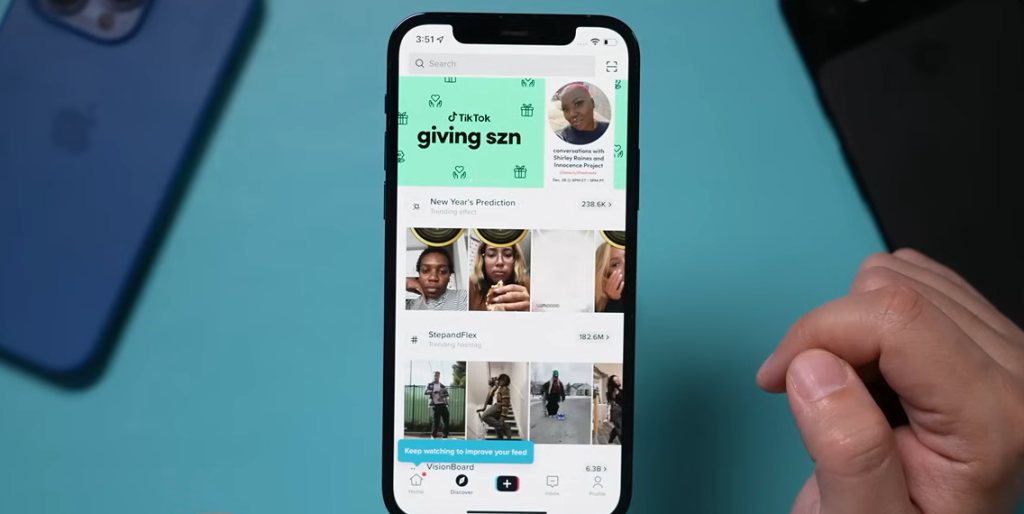
TikTok silently disappeared from millions of phones nationwide on a frigid Friday morning in January. There was only a flicker, a freeze, and a barrage of bewildering refreshes—no official statement or warning. The app was back before midday. However, it returned with something more sinister: a deadline of ninety days to separate from its Chinese parent company or face prohibition. For brands that had staked their future on TikTok, this was the beginning of a new period of uncertainty.
TikTok served as a launchpad for tiny brands rather than merely another platform. Casual product demos became instant bestsellers thanks to the app’s algorithm, which was specially created to magnify even the most unpolished footage. Driven by discovery-first mechanisms, this was more than simply digital marketing; it was digital magic that elevated even obscure creators to the status of household stars.
The ground then moved. Lawmakers advanced as they became more cautious about data security risks. Uncertainty struck like a storm cloud for the creators and businesses whose revenue skyrocketed as a result of TikTok’s Shop feature. During significant sales occasions, TikTok Shop frequently outperformed traditional e-commerce channels due to its extraordinary efficiency in turning views into purchases. A simple redirect could not replace its loss.
The consequences went well beyond app screens. TikTok accounted for at least 70% of overall sales for a large number of DTC firms. Teams had to rewire overnight due to the shutdown, switching to YouTube Shorts and Instagram Reels. Despite their apparent similarities, these platforms’ algorithms and audience behavior differ greatly.
| Key Insight | Details |
|---|---|
| Affected Users | Over 170 million U.S. users impacted by TikTok shutdown |
| TikTok Shop Revenue | $100M+ in Black Friday 2024 sales; 165% YoY growth |
| Marketing Disruption | Loss of low-cost virality and influencer-driven discovery |
| Platforms Gaining Traction | Instagram Reels, YouTube Shorts, Pinterest, Snapchat |
| Strategy Shift | Increased focus on owned channels and multi-platform agility |
| Influencer Marketing Impact | Shift to multi-platform influencers with diversified reach |
| New Contender | Xiaohongshu (#TikTokRefugees trend) emerging as alternative |
An Instagram conversion rate was abruptly cut in half for a Brooklyn-based skincare firm that was well-known for its clay mask challenges. Their founder informed me that rhythm, not innovation, was the issue. Their content was specifically suited to TikTok’s looped comedy and informal tone. In contrast, polished and poised reels felt strangely rigid.
They started experimenting strategically with different hooks and tempo. A portion of the information was stuck. Most of it didn’t. What came out of the pandemonium, however, was a renewed feeling of flexibility—a reminder that while virality might happen quickly, maintaining relevance requires much more subtlety.
Multi-platform strategy was the new norm by the end of February. Brands invested in newsletters, SMS marketing, and SEO-optimized blogs in an attempt to recover direct consumer ties. Once unduly dependent on social lift, the e-commerce playbook was being rewritten, line by line, in real time.
Shopify sites started to have noticeably better email capture tools and reward programs. Owned media was being rediscovered by brands that had previously disregarded it. When a third-party app possessed the keys, the loss of TikTok’s algorithmic engine revealed how vulnerable audience access actually was.
Some businesses took advantage of the opportunity with remarkable success. Utilizing the momentum, an Austin-based sustainable shoe company turned TikTok shorts into long-form content for a mini-documentary series on YouTube. According to their head of creative, “it’s not just about pivoting platforms.” “It’s about completely rethinking storytelling.”
There were difficulties associated with such kind of creative reinvention, but there were also unanticipated benefits. All of a sudden, multi-touch attribution became evident. Retention of customers increased. Previously dispersed throughout TikTok’s interface, conversion pathways have now stabilized into more dependable patterns. Strategic depth was obtained in exchange for impulsive virality.
The TikTok freeze brought to light something far more intimate for creators. Many felt pressured to expand their audiences elsewhere in order to maintain revenue security as well as reach. A few started using paid newsletters. Others increased their affiliate marketing efforts. Some even started blogging again, bringing back the kind of gradual trust that TikTok had rendered nearly extinct.
One unexpected beneficiary was Xiaohongshu. The popular hashtag #TikTokRefugees caused a surge in U.S. downloads for the Chinese lifestyle-sharing app. Its visual narrative style, which combined peer review with product inspiration, felt both familiar and novel. It gave brands observing from the sidelines an idea of what could take TikTok’s place in the event that it completely disappeared.
Influencer agencies started discreetly revising contracts during this period. TikTok’s dominance was no longer sufficient. Clients started asking for a multi-platform presence with built-in backup plans for quick migration if necessary. The influencer economy was strengthening against platform collapse by adjusting in real time.
Brands have grown more at ease depending on uncontrolled social media platforms in recent years. Even the leanest startup has a chance at relevance thanks to TikTok’s incredibly potent and shockingly inexpensive algorithm. However, this convenience led to a blind spot. The platform’s supporting infrastructure faltered along with it.
Whether it is implemented or not, the ban has turned into a trigger. Brands are being forced to reevaluate what “growth” actually means. Is it gauged by long-term client loyalty or by one-time viral hits? Nowadays, the most astute operators are pushing toward diversification in terms of content, formats, and interaction tactics in addition to platforms.
Recently, a cosmetics business from Los Angeles released its own app that gives users early access to products and unique content. The move was “not defensive, but liberating,” according to their founder. They restored power by controlling both distribution and audience, something that had gradually diminished with each algorithm change.
The next wave is already being led by incredibly adaptable marketers that combine traditional strategies with digital proficiency. They’re working together across unexpected verticals, trying live shopping, and going back to user-generated content. For them, TikTok’s instability serves as a catalyst for change rather than a conclusion.