Last October, military doctors were practicing a fictitious mass casualty scenario inside a simulation room at Merville Barracks in Colchester. several injuries. restricted resources. decisions that would need to be taken in a matter of seconds during actual conflict.
Unbeknownst to the physicians at first, an artificial intelligence system that had been trained to mimic their own ethical standards, decision-making preferences, and sense of who gets treated first and why was providing them with advice during that exercise. The researchers’ true inquiry was not whether the AI was accurate. The question was whether the medics would follow it because they trusted it.
| Category | Details |
|---|---|
| Programme Name | DARPA “In the Moment” — AI alignment with individual human decision-making in high-risk environments |
| Lead UK Body | Defence Science and Technology Laboratory (Dstl) |
| US Partner | Defense Advanced Research Projects Agency (DARPA) |
| Trial Locations | Merville Barracks, Colchester and RAF Brize Norton — October 2025 |
| Test Scenarios | Simulated mass casualty events — desktop exercises and virtual reality environments |
| Core Research Question | Would medics trust and delegate decisions to an AI that mirrors their own judgement? |
| Ethical Variables Tested | Prioritising victims vs. attackers; quality of life vs. survival odds; personal/professional affiliations |
| Early Finding | Greater AI-human alignment increases willingness to delegate triage decisions |
| Stated Goal | AI to support, not replace, human judgement in battlefield medical situations |
| Further Reading | Coverage and analysis at The Guardian AI desk |
The American Defense Advanced Research Projects Agency and the UK’s Defence Science and Technology Laboratory collaborated on the trials, which are a component of the DARPA program “In the Moment.” The initiative is looking into a particular and very challenging question: can AI systems that follow a person’s decision-making style foster greater trust than those that merely follow a set of external rules?
That question is not abstract in wartime medicine, when a medic may get more information at once than any human cognitive system can process well under pressure. It actually affects how quickly patients receive treatment and, consequently, whether they survive.
Whether to give civilian victims priority over combatants, how to balance a patient’s expected quality of life against their raw survival odds, and whether a medic’s personal or professional relationship with a casualty should have any bearing on treatment decisions were among the ethical topics covered by the scenarios tested in both desktop and virtual reality formats.
In military medicine, these problems are nothing new. For decades, ethics committees and field hospitals have discussed them. The concept of encoding them into an AI system and then observing whether human operators recognize that encoding as reliable enough to delegate choices to is novel.
According to preliminary research, a physician’s propensity to delegate increases when the AI’s decision-making profile closely resembles that of the medic working alongside it. That outcome is intriguing and, depending on your personality, either comforting or slightly concerning.
It is comforting because it implies that personalization, rather than standardization, may be the route to beneficial human-AI cooperation in high-stress situations—creating systems that feel like extensions of current human judgment rather than external impositions.
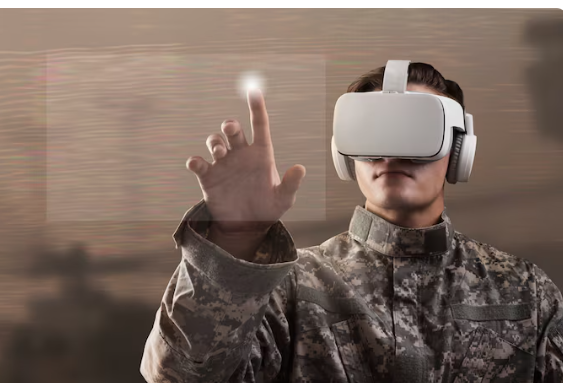
It is concerning because it begs the question of what occurs when a medic’s personal judgment is faulty, biased, or subject to the distortions that battle consistently causes in human cognition. An AI is not a check on the issue if it mimics a compromised decision-maker. It’s an amplifier.
The researchers have taken a cautious and consistent stance: AI is meant to supplement human judgment rather than replace it, especially given the increasing amount of information that current operational contexts throw on individual staff members.
The responsible and most likely sincere framing is that one. It’s also uncertain if the current program’s protections will withstand real deployment circumstances, where resource and speed limitations have the ability to move the practical borders between “replacement” and “support” without anybody formally choosing to violate them. These changes typically occur gradually and are more difficult to undo after they have taken place.
It’s difficult to overlook the fact that the trials—Colchester and Brize Norton in October—were carried out in secret, with the findings contributing to continuing research with little public exposure. That’s not very sinister, and it’s not out of the ordinary for defense research.
However, it seems worthwhile to close the gap between what is being tested and what is being discussed in public when it comes to work that deals with issues like life-and-death delegation, psychological profiling of active soldiers, and the ethics of combat triage. The program is in place. The trials took place. They bring up issues that should be discussed in a more comprehensive manner than what is now happening.