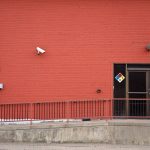
A camera is installed above the entrance of a major public facility in Tallahassee that most people are unaware of. It’s the type of glass-and-marble state government structure where people wait in line every morning to go through security. It’s not aimed at their faces. It scans for the silhouette of a weapon while being trained on their hands and hips. It is powered by a machine learning system that can tell a pistol from a phone and a shoulder holster from a purse strap.
A bipartisan majority of Florida’s legislature determined in 2025 that this camera should be prohibited in most situations. if that ruling is upheld and if other states should be keeping an eye on it will depend on the legal challenge currently making its way through the courts.
| Category | Detail |
|---|---|
| Key Legislation | Senate Bill 562 (Sen. Blaise Ingoglia, R-Spring Hill) and House Bill 491 (Rep. Monique Miller, R-Palm Bay) — both propose to ban AI-based firearm detection in most public spaces in Florida |
| Criminal Penalty Proposed | Using AI to detect firearms in public spaces would be classified as a first-degree misdemeanor under SB 562 — punishable by fines and potential jail time; takes effect July 1, 2025 if signed |
| Exceptions Carved Out | Both bills permit AI gun detection to continue on school grounds and at locations specifically listed in existing Florida firearms statutes — a partial carve-out that opponents argue is inconsistent |
| Sponsors’ Stated Justification | Senator Ingoglia: “We should not give up our rights because of technological advances” — citing Second and Fourth Amendment concerns; Gun Owners of America aligned with the legislation |
| Technology Being Targeted | AI camera systems that scan for visible (brandished) weapons in public spaces — companies include ZeroEyes, Evolv Technologies, and others; ZeroEyes co-founder notes software only flags brandished guns, not concealed firearms |
| FTC Action Against Evolv | The Federal Trade Commission took action against Evolv Technologies for allegedly misleading buyers about its weapon detection system’s effectiveness — complicating the industry’s credibility argument |
| Civil Liberties Concern | Opponents of the technology cite false positive incidents — including one case where a musical instrument case was flagged as a weapon — and broad surveillance concerns regarding AI in public spaces |
| Further Reference | Legislative tracking and analysis at Electronic Frontier Foundation and Florida Politics |
Early in 2025, Republican lawmakers Senator Blaise Ingoglia and Representative Monique Miller submitted Senate Bill 562 and House Bill 491, which would make using AI to identify firearms in public areas a first-degree misdemeanor in Florida. Not a breach of regulations. a crime that might result in fines and jail time.
The laws expressly target the software layer that utilizes pattern recognition to identify gun forms in a video feed; they do not target metal detectors, pat-downs, or conventional security screening. Instead, they target AI camera systems that scan visible, brandished weapons. According to the proposed legislation, it would be illegal for someone to use that software in most public areas when the law goes into force.
The Second and Fourth Amendments are the constitutional justifications for the act. “We should not give up our rights because of technological advances” is how Ingoglia frames the issue, portraying AI gun detection as a type of government monitoring that restricts the exercise of the right to bear arms.
The reasoning goes that law-abiding gun owners passing through a public area are being tracked in a way they never agreed to and that the Bill of Rights’ framers never foresaw if an AI camera is always looking for guns. Gun Owners of America’s Florida state director, Luis Valdes, called the technology “draconian”—a description that struck a chord with a base that is extremely wary of any form of state surveillance. Even if the legislation’s conclusion is broad, there is some validity to that worry.
The issue is that the advocates and opponents of the technology are not cleanly split along the lines one might anticipate. One of the leading companies in the AI security detection market, Evolv Technologies, was sued by the Federal Trade Commission, which is not usually involved in Second Amendment advocacy, for allegedly misleading customers about the effectiveness of its systems.

Concerns that the product being marketed as a public safety answer was, in at least some circumstances, being oversold gained credibility as a result of that action. For opponents of the technology, a different, more commonplace occurrence in which an AI detection system identified a musical instrument case as a possible weapon became something of a warning emblem: a striking example of what false positives look like in real life when the stakes are high.
Another business in the field, ZeroEyes, has made a name for itself. Sam Alaimo, one of the company’s co-founders, has taken care to publicly point out that the software only detects displayed firearms, or those that are visible and being carried in public, not concealed weapons.
Legally speaking, this technological detail is important because if the equipment truly cannot see what it is being accused of surveilling, the constitutional concern over the surveillance of licensed concealed-carry holders seems differently. It’s still uncertain if the writers of the legislation will recognize that distinction as significant or if the courts will treat it as decisive.
It’s intriguing to see this discussion unfold in Florida in part because it challenges the traditional political geography of gun control. This is not a standard gun control battle. Gun rights, not gun safety, is the motivation of those advocating for restrictions on this technology.
Professionals in public safety and IT firms that stand to gain financially from the continuous usage of their products are the ones supporting it. Courts around the nation are still creating frameworks to deal with the relevant fundamental concerns, which include privacy, surveillance, and the right to bear guns. The first significant court test of the argument is very certainly going to take place in Florida.