Earlier this year, the setting in a South Carolina clinic’s pediatric waiting room was nearly typical. Parents looking through their phones. Kids fidgeting in plastic seats. In the corner, a television murmurs faintly. However, nurses were discreetly developing isolation protocols behind the reception counter, something that most of them had not previously needed.
Measles was treated in the US for many years as if it were a medical relic, the kind of illness that was more often found in history books than on hospital records. After years of vigorous vaccination campaigns, public health experts declared it eradicated nationwide in 2000. It appeared to be one of the modest victories of modern medicine for a while.
Key Information Overview
| Category | Information |
|---|---|
| Disease | Measles |
| Declared Eliminated in U.S. | 2000 |
| Cases in Early 2026 | Nearly 1,000+ reported |
| States Affected | 26 |
| Major Hotspots | South Carolina, Florida, Texas, Utah |
| Most Affected Age Group | Children and teens (5–19 years old) |
| Cause of Resurgence | Falling vaccination rates and misinformation |
| Herd Immunity Requirement | ~95% vaccination coverage |
| Vaccine | MMR (Measles, Mumps, Rubella) |
| Reference |
In the first two months of 2026, the number of confirmed cases of measles in the US had risen to about 1,000. Just the number is startling. The rapidity of the spike, however, is what really worries epidemiologists. After an already challenging year in 2025, this outbreak now poses a threat to the nation’s biggest measles resurgence in over thirty years.
Public health authorities find the trend on the illness map to be strangely familiar. With over 600 cases confirmed, South Carolina is currently the epicenter of the outbreak. Florida, Texas, and Utah have also seen notable concentrations. However, state boundaries are rarely respected by the virus.
Children and teens between the ages of five and nineteen account for more than 80% of confirmed cases. Measles spreads swiftly once it enters a community, especially in schools and youth sports leagues where close contact is common. Measles also spreads incredibly easily.
A statistic known as the reproduction number—the number of persons an infected person may infect—is frequently used by medical researchers to characterize the virus. In groups with little immunity, that figure can rise to eighteen for measles. There aren’t many viruses that spread more easily.
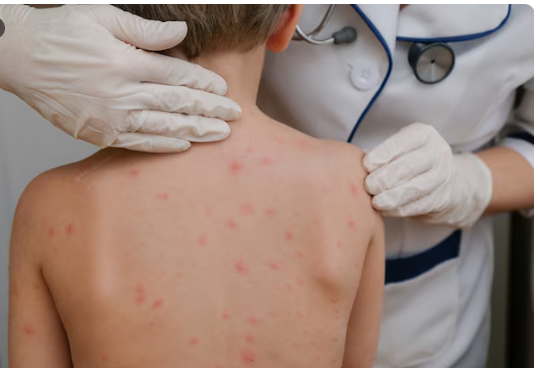
When conducting an epidemic investigation in a hospital hallway, it’s difficult to ignore how slowly the virus initially spreads. Fever, coughing, and watery eyes are early signs of a common cold. Parents believe it is a seasonal sickness. Kids still go to school.
The obvious rash shows up a few days later. The virus might have advanced a few steps by then. There isn’t much mystery surrounding the resurgence’s fundamental cause. Immunization rates have been declining.
Approximately 95% of a community must receive two doses of the MMR vaccination in order to achieve herd immunity for measles. The United States maintained a thin but effective barrier against epidemics for years by staying just beyond that threshold. However, the figures have changed.
Kindergarten vaccination rates decreased from approximately 95.2 percent in the 2019–2020 school year to approximately 92.7 percent in 2023–2024. The difference appears to be only a few percentage points at first glance. However, minor adjustments might lead to significant opportunities in epidemiology.
Clusters of them openings are common. The virus can gain foothold in some regions with lower vaccination rates before migrating to other areas. Outbreaks may unintentionally be caused by social networks, religious organizations, or geographical areas that are reluctant to receive vaccinations. Traveling abroad adds another level of complexity.
Measles is still prevalent in many regions of the world. It is nearly impossible for a traveler carrying the virus to unintentionally spread it to a society that is undervaccinated. One arrival at the airport. One classroom at a school. One birthday celebration. And the domino effect starts.
Misinformation, according to public health experts, has contributed significantly to the decline in vaccination rates. Following the COVID-19 epidemic, some members of the public were more distrustful of medical institutions, and this mistrust extended to well-known vaccines like MMR. Sometimes social media posts and internet rumors spread more quickly than the infection itself.
It’s probable that a gradual decline in trust rather than just false information is the underlying problem. Vaccinations were regarded as a standard procedure in child healthcare for many generations. They are now involved in more general cultural discussions over authority, science, and individual liberty. The change in ordinary talks is felt by doctors.
A Texas pediatrician recently explained how normal visits may involve lengthy conversations with reluctant parents, outlining the safety record of immunizations that have been around for decades. In the end, many families decide to get vaccinated. Some people are still unsure. Measles is still silently spreading through susceptible areas in the meantime.
The latest outbreak is the deadliest resurgence in the US in many years, with several deaths already documented. The deaths are particularly significant for a condition that is thought to be avoidable.
There’s an odd sense of historical reversal as you watch the numbers rise week after week. Experts are reminded of how brittle eradication might be by the gradual resurgence of diseases that were previously marginalized in public health. There has been no change in the science underlying measles prevention.
Measles used to be one of the most feared diseases in children, but two doses of the MMR vaccine are still quite effective at preventing serious complications like pneumonia, brain inflammation, and even death. However, the outbreak that is spreading throughout 26 states indicates that there is more going on than just biology.
It illustrates the complex interplay between contemporary cultures and the safeguards put in place to keep them safe. In addition to science, vaccines rely on public consensus—millions of individual choices creating a common defense against illness.