As visitors wait in line with cameras and water bottles, the stone columns outside the British Museum continue to loom large, creating long shadows across Great Russell Street. It feels quieter inside than usual, but that could just be my imagination. The building seems to be carrying more weight now, doubt rather than actual weight.
After publishing artificial intelligence (AI)-generated pictures of a fictitious visitor named “Ellie Lynn” exploring the museum’s galleries in early 2026, the institution was caught off guard. She was dressed in traditional attire that was attached to artifacts, and her expressions were frozen in that oddly polished manner that frequently reveals AI creations. The posts initially appeared innocuous, even endearing. However, there was something strange about them. Critics took notice right away.
Important Information About the British Museum
| Category | Details |
|---|---|
| Institution | British Museum |
| Established | 1753 |
| Location | London, United Kingdom |
| Governance | Managed by Board of Trustees |
| Collection Size | Over 8 million objects |
| Recent Controversy | AI-generated images criticized as misleading |
| Reference Link |
Historians and archaeologists wondered if the pictures made it harder to distinguish between fact and fiction. Presenting a fictional character interacting with actual artifacts, according to some, ran the risk of warping our understanding of the past. The experiment may have been seen as harmless outreach by museum staff, who were attempting to draw in younger audiences who had grown up with synthetic media. However, the reaction implied that something more profound had been impacted. The pictures disappeared in a matter of hours.
The damage was not stopped by that hasty deletion. Screenshots had already circulated among museum professionals and academic circles on social media. The institution was publicly accused by one archaeologist of testing whether algorithms could take the place of human creativity. As that criticism grew, there was a sense that once trust is damaged, it rarely regains its original form. The museum maintained that the pictures were not authentic historical depictions but rather user-generated content. The difference felt thin, though.
A precarious position in public life is held by museums. They are stewards of memory, not merely structures crammed with stuff. It raises concerns about what is authentic and what is being subtly altered when those organizations start experimenting with fake images, even for marketing purposes. The trustees’ complete awareness of how delicate that boundary had become is still unknown. Soon after, legal professionals started talking about possible liability.
The question wasn’t just whether the pictures were phony. It concerned the potential for public misinformation or ethical transgressions related to institutional governance when AI-generated scenes were presented in an educational setting. Trustees, who were in charge of preserving the museum’s integrity, were suddenly under investigation for failing to exercise adequate supervision. Not everyone has overlooked the irony.
The British Museum has defended its ownership of disputed artifacts, including items seized during colonial expansion, for decades. It has long been criticized for allegedly retaining unrelated history. Now, the issue was invented history rather than stolen history. Although the difference is important, the harm feels strangely similar on an emotional level.
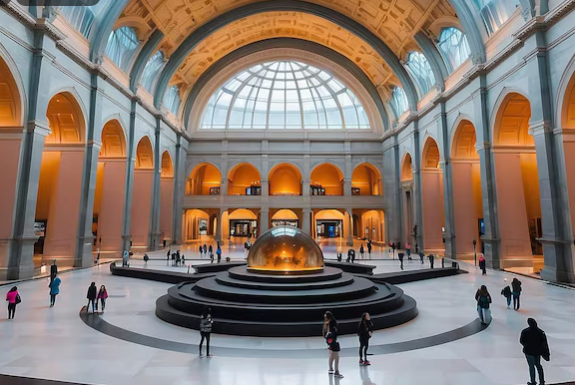
Inside the museum, visitors still stroll in silence through galleries brimming with gold and ancient stone. In front of an Egyptian sarcophagus, a woman reads the description slowly, as though to make sure every word is still accurate. It’s difficult to ignore how suddenly brittle that trust feels. Museums operate under the presumption that the exhibits are genuine, or at the very least truthfully presented.
That presumption is complicated by artificial intelligence. AI has been marketed by tech companies as a means of visualizing and conserving the past, including the reconstruction of destroyed artifacts or lost cities. However, the ease with which those reconstructions can be incorporated into fiction is causing increasing unease. Though organizations like museums must make a different calculation, investors appear to think AI will change education and culture. It might be impossible to completely regain their credibility once it has been lost.
The museum has committed to creating more stringent policies. It is unclear if those guidelines will appease critics. Some people think the next technological scandal will overshadow this one. Others believe it’s a watershed moment that will force cultural organizations to face the ways in which digital tools are changing their roles.
As this develops, it seems like museums are venturing into uncharted territory. They were not constructed to create the past, but to preserve it. And now, encircled by centuries of human history and standing beneath the Great Court’s enormous glass roof, the question seems inevitable.
Who gets to decide where history ends and invention starts if organizations tasked with upholding the truth start experimenting with artificial memory?