I was watching a couple in their eighties pedal home while carrying baskets of fresh goods on a quiet street in Utrecht. Not only was their ease endearing, but it was also educational. I remembered that moment long after I left because of their deliberate movement, which was encouraged by urban planning that prioritized bicycles over SUVs.
It compelled a reconsideration: what if fewer automobiles, rather than cleaner ones, are the true climate solution?
Public opinion has been significantly influenced by electric vehicle marketing. EVs have been positioned as a guilt-free upgrade, promising modernity with a lighter carbon footprint, thanks to slick advertisements, bold promises, and sleek designs. However, a closer look reveals a more somber tale. An electric automobile has a substantial environmental impact even before it is put on the road.
Every ton of lithium extracted from South American desert salt flats uses hundreds of thousands of gallons of water, frequently at the expense of nearby people that depend on such aquifers. An even more dire picture is painted by the ecological and human costs of cobalt mining in the Congo, which is mostly unregulated and unsettlingly reliant on child labor. These are inherent expenses rather than merely peculiarities of production.
| Category | Detail |
|---|---|
| Main Argument | EVs alone cannot meet global climate targets |
| Battery Production Issues | High emissions from lithium, cobalt, and nickel extraction |
| Grid Dependency | Fossil-fuel-powered electricity reduces EV climate benefits |
| Infrastructure Gaps | Limited public transit, insufficient EV charging networks |
| Behavioral Challenges | Car dependency remains high; limited lifestyle change adoption |
| Systemic Solutions Needed | Investment in mass transit, walkability, micromobility |
| Reference Example | Oxford study: cycling cuts emissions 30x more than fossil fuel driving |
| Credible Source | IEEE Spectrum – EVs Not a Climate Panacea |
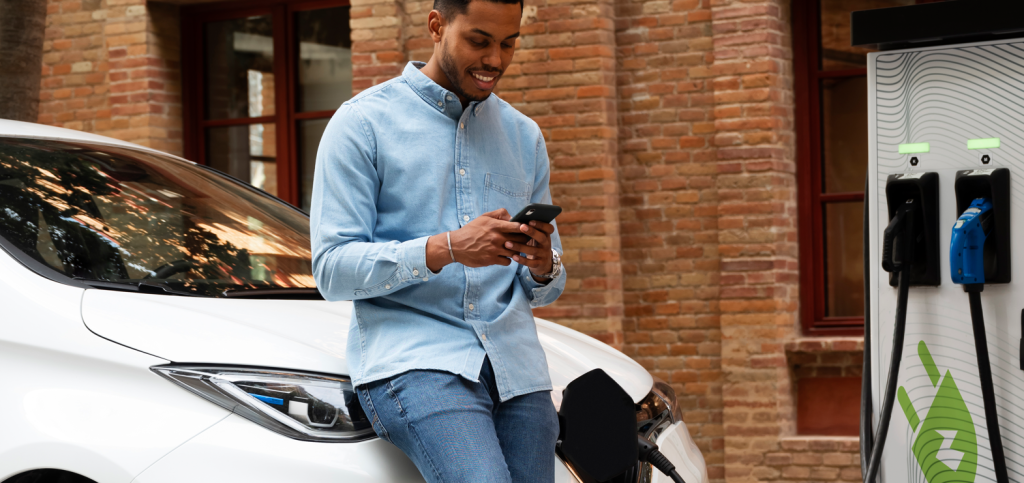
Once the car is moving, the emissions situation improves, but it is highly grid-dependent. The benefit is much diminished in areas that are still coal-powered. According to a Polish research, it would take more than 120,000 kilometers to recharge an EV charged from the country’s fossil fuel-heavy grid in order to equal the emissions of a small gas-powered vehicle. Compare that to Norway, where hydropower significantly advances that breakeven point.
However, the idea that everyone should possess an electric vehicle is essentially incorrect, even with greener grids. It preserves the precise framework that brought us to this point: vast suburbs, isolated transit, and an infrastructure that is highly tailored for the use of private vehicles. Car ownership is a need rather than a choice in the majority of American communities. Because of this, switching to EVs doesn’t feel like a revolutionary change, but rather a small improvement.
When I spoke with a transit planner in California, I noticed how frequently he used the phrase “reduction.” Car mileage, road space, and even the need for parking are all factors in emissions. His staff was more concerned with encouraging individuals to drive less than they were with what they drove. Many discussions on climate policy lack that subtlety.
Cities like Barcelona and Paris have extended bike lanes and recovered roads through integrated design and strategic partnerships. Nearly half of all commuting trips in Copenhagen are made by bicycle. When transit is viewed as a primary investment rather than a last choice, these models demonstrate what is feasible. Although it’s not very showy, it’s very adaptable.
It’s true that changing habit is more difficult to market. Purchasing an automobile feels liberating. Giving up one is like making a sacrifice. However, combining the benefits of better buses, more dense housing, and pedestrian streets yields climate gains far more quickly than depending alone on battery improvement.
In actuality, we’ve created whole economies around the notion that freedom equates to mobility. However, proximity—living nearer to what we need rather than rushing between far-off places in electric silence—may bring freedom as climate constraints increase.
“EVs are helpful, but insufficient,” the chief of the International Energy Agency once said. I still think about the line. Every suburban plan that has drive-thrus but no sidewalks, every budget that prioritizes highways over rail, and every policy that touts EV subsidies without addressing the dearth of dependable transit all reflect this.
The use of electric vehicles is expected to increase in the upcoming years. Price reductions, battery advancements, and remarkable range are all possible. However, we won’t have solved the entire issue if that adoption isn’t combined with a daring rethinking of how we travel.
More important than the drivetrain is the destination.
We benefit from healthier lifestyles, cleaner air, peaceful evenings, and equal access to opportunities when cities are planned for people rather than automobiles. One EV isn’t capable of doing all that. However, a system designed to transport people sustainably—using feet, highways, and rails—certainly can.
Charging stations aren’t the only thing paving the way. It is molded by purpose, inclusivity, and an open examination of what really works. Indeed, electric cars are a greener option. However, the climate needs wiser decisions, not cleaner ones.