The revelation came to light through an investigative piece rather than a government admission, appearing in CBC Indigenous coverage instead of a press conference or a parliamentary statement, as is common in Canada. Since the late 1960s, the Royal Canadian Mounted Police had been conducting a specialized surveillance program aimed at First Nations leaders and Indigenous rights movements. wiretaps. paid sources of information.
For years, undercover agents were integrated into local communities. Additionally, leaders such as Phil Fontaine and Ovide Mercredi, both former National Chiefs of the Assembly of First Nations, were monitored under an internal file category called “Native Extremism” as possible threats rather than as elected representatives of Indigenous peoples exercising their legal rights.
| Category | Details |
|---|---|
| Organization | Royal Canadian Mounted Police (RCMP) |
| Commissioner | Mike Duheme |
| Investigation Source | CBC Indigenous investigation — decades-long surveillance program revealed |
| Historical Surveillance Period | Late 1960s and beyond |
| Program Name | “Native Extremism” program (dedicated intelligence operation) |
| Monitored Leaders | Phil Fontaine, Ovide Mercredi (former AFN National Chiefs) |
| Surveillance Methods (Historical) | Wiretaps, paid informants, undercover operatives |
| Current Drone Fleet | 973+ units — many from Chinese manufacturer DJI |
| Drone Restriction | DJI units restricted to “non-sensitive operations” due to security risks |
| AI Integration | Report-writing from body camera footage; facial recognition audits |
| RCMP Response | Commissioner expressed “sincere regret”; maintains current practices are different |
| Indigenous Response | Rejecting apologies; demanding full public inquiry |
| Privacy Concern | Surveillance experts alarmed by drone and AI use near Indigenous communities and protests |
On its own terms, the history is enough damning. But what’s amplifying the current controversy is the obvious question it raises about the present: if the RCMP was willing to run a covert, sustained surveillance operation against Indigenous communities for decades without public knowledge, what assurance exists that the tools now available—far more powerful than 1960s wiretaps—are being deployed with the restraint that wasn’t applied before?
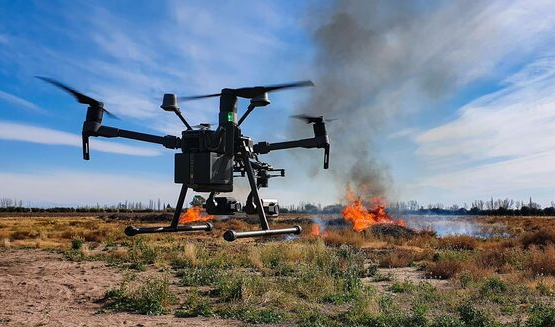
The specific, as opposed to theoretical, aspect of the issue is the drone fleet. Over 973 remotely piloted aircraft are used by the RCMP, many of which were produced by DJI, the Chinese firm that controls the world’s consumer and commercial drone markets. After security concerns about data handling were voiced, the RCMP internally limited those DJI units to “non-sensitive operations.”
This is a somewhat circular logic—using the same drones for “non-sensitive” policing while admitting they’re compromised for sensitive work—as well as an acknowledgement that the risk is real. During trials, the drones have been seen operating close to Indigenous land, and the villages they passed over may not have been informed.
An additional dimension is added by the AI integration. In order to lessen the administrative load on officers and create records from video that might not have been inspected before, the RCMP has begun testing AI techniques to generate reports from body camera footage.
Additionally, they have been conducting audits of their usage of facial recognition technology, which is subject to an unclear legislative framework in Canada. Concerns regarding the use of facial recognition in protests or community gatherings close to reserve boundaries have been voiced by privacy advocates and surveillance researchers. In these situations, the technology’s known accuracy issues may result in misidentifications that end up in police records.
Commissioner Mike Duheme expressed “sincere regret” for the historical program, but his words sound more carefully crafted than sincere. First Nations leaders are fighting back against the framing, which holds that the present force is essentially different from the organization that oversaw the “Native Extremism” program.
Apologies are not the same as accountability, which would necessitate an impartial, public investigation that looks at both past and present practices and is carried out with Indigenous participation instead of being handled through institutional processes that the RCMP is in charge of.
In April 2026, this story remains unanswered due to the demand for an investigation. First Nations leaders have stated unequivocally that the apology is inadequate, the explanations are lacking, and the evidence of surveillance technology deployment close to Indigenous communities—without clear legal frameworks, community consent, or transparent authorization—does not reassure anyone that the patterns of the past have actually changed.
The RCMP’s insistence that the current use of drones and artificial intelligence is solely focused on national security and organized crime ignores the particular issue, which is that the definition of a threat has historically been applied in a way that viewed lawful Indigenous political activity as suspicious.
As I see this unfold, I get the impression that the technology question is actually the most straightforward aspect of the discussion. It is possible to write drone restrictions, suspend facial recognition, and carefully scope body camera AI.
These are choices on policy. The more difficult question is whether an organization with the RCMP’s particular experience with Indigenous communities has gained the trust necessary to use potent surveillance tools in those communities without the independent scrutiny that trust deficits usually need. There is no technical answer to the query.