There’s a kind of delight in watching a veteran actor ease into a role with such confidence that you forget the lines are scripted. On the third episode of The Pitt’s second season, Michael Nouri appears as Nathaniel Montrose, an elderly patient who may or may not be using his injuries as an excuse to flirt with Dr. Cassie McKay, played by Fiona Dourif. It’s a performance built on sideways glances, slow smiles, and a practiced charm that never feels put on.
Montrose arrives at the ER after a fall—minor, we’re told, but just serious enough to warrant observation. He’s the kind of patient who chats with strangers in the waiting room, offers unsolicited advice to interns, and doles out compliments with a soft drawl that suggests he once sold insurance or seduced audiences in a cabaret lounge. The script doesn’t overplay the nostalgia. It doesn’t need to. Nouri does the heavy lifting, simply by being there.
Michael Nouri – “The Pitt” Guest Star
| Name | Michael Nouri |
|---|---|
| Date of Birth | December 9, 1945 |
| Notable Roles | Flashdance, The O.C., Yellowstone |
| Latest Appearance | Nathaniel Montrose on The Pitt, Season 2, Episode 3 |
| Theatre Work | Victor/Victoria, Broadway and Off-Broadway |
| Awards | Saturn Award & Daytime Emmy nominee |
| Credible Source | michaelnouri.com |
For viewers unfamiliar with his earlier work, Nouri might register as vaguely familiar: perhaps the doctor on The O.C., or the politician from Damages, or the dignified businessman from Yellowstone. For others, the memory of Flashdance burns brighter. As Nick Hurley, the well-heeled love interest in Adrian Lyne’s 1983 box office hit, he embodied a certain masculine polish—calm, confident, clean-shaven—that came to define his typecasting through the late ’80s and into television’s prestige dramas.
What makes his role on The Pitt worth discussing isn’t just the novelty of seeing a seasoned actor in a character role. It’s how effortlessly he reclaims space on screen, even in an ensemble built for younger energy. Dourif, for her part, plays McKay with a balance of exhaustion and curiosity. She’s not immune to Montrose’s banter. There’s an unspoken camaraderie between them that leans more toward kinship than seduction, and it works because neither actor is trying to force sentimentality.
Nouri’s voice—gravelly but still melodic—carries much of the emotional weight. He asks about the hospital’s cafeteria food with the same cadence you might use to ask someone to dance. He delivers a line about his late wife, seemingly offhand, and it lands with just enough weight to pause the rhythm of the episode. These are small moves, subtle cues, and they signal an actor who knows the difference between screen time and presence.
There was a moment, when Nouri glanced over his shoulder at the young nurse adjusting his IV, where I felt a strange kind of déjà vu—like watching an echo of an actor I’d seen decades ago, now wearing age like a well-cut coat.
To be clear, The Pitt is not a show that builds itself around its guest stars. Its premise—a tense, character-driven ER drama with tinges of dark humor—is built for narrative churn. Patients come and go. Doctors move through their personal crises while saving lives. Guest characters are often plot devices. Yet here, Nouri’s Montrose feels like something different: a ghost of the past showing up with nothing to sell, just stories to share.
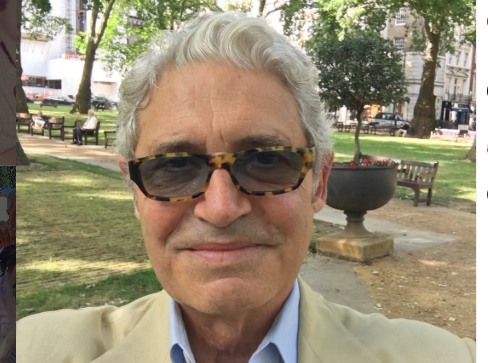
That texture matters. It makes the ER feel less like a machine and more like a crossroads. Part of what makes this guest role noteworthy is how it rounds out Nouri’s legacy on screen. This isn’t his first time playing vulnerable or aging characters. But there’s something particularly charming about his willingness to play weak—not just physically, but socially. Montrose doesn’t posture. He doesn’t demand attention. He allows himself to be taken care of, without relinquishing his sense of humor or dignity. That balance, especially for male characters of his age bracket, is still frustratingly rare on network television.
Nouri, who turns 81 this year, has aged with a sort of deliberate grace. He’s never quite leaned into the grizzled archetype, nor has he tried to chase youth. In this role, he allows his face to do what seasoned actors know best—speak without needing to underline. There’s a pause after one of his lines to McKay—something about not being in a rush to get better—that hovers with unusual tenderness. It isn’t about death, exactly, but about pace, and permission to linger.
Of course, Nouri has more than just charm in his toolkit. His theater work, particularly in Victor/Victoria, taught him how to shape space even when silence dominates. That same sensibility shows up in Montrose’s pauses and asides, which function more like stage beats than camera-driven cues.
It’s worth noting that The Pitt gave him more than a walk-on cameo. This was a role with shading, a character given permission to reflect and react—not just trigger exposition. Perhaps that’s what made the episode feel unusually full, even though it followed the show’s standard 42-minute structure.
Viewers expecting emotional catharsis might have missed the episode’s intent. Montrose doesn’t die, doesn’t make grand revelations, and doesn’t push McKay toward a major decision. What he does is simpler: he reminds the staff—and by proxy, us—what kindness without urgency looks like.
In an era when television often prizes spectacle or trauma, that’s a rare offering.
It would be easy to dismiss this performance as a footnote in a long career. But there’s something admirable about the way Michael Nouri continues to show up—unhurried, unshowy, but unmissable. He reminds us that guest spots, when treated with care, can be more than filler. They can be quiet lessons in how to hold a room, even from a hospital bed.