The narrative that Deontay Wilder has been sharing about his daughter Naieya for almost twenty years has taken on a specific form. It all started in March 2005, when Wilder, then 19 years old and working several jobs in Tuscaloosa, Alabama, learned that his oldest child would be born with a severe congenital issue. When a baby’s spine and spinal cord do not fully develop in the womb, it results in spina bifida.
Usually, a diagnosis is made either during pregnancy or soon after delivery. Something more challenging was added by the doctors who broke the news to a young Wilder.
| Deontay Wilder and Naieya — Key Information | Details |
|---|---|
| Boxer | Deontay Wilder |
| Wilder’s Age | 40 |
| Hometown | Tuscaloosa, Alabama |
| Career Highlights | 2008 Olympic bronze medal; WBC heavyweight champion 2015-2020 |
| Title Defenses | 10 |
| Daughter | Naieya Wilder |
| Naieya’s Birth Date | March 20, 2005 |
| Recent Milestone | 21st birthday (March 2026) |
| Diagnosis | Spina bifida |
| Initial Medical Prognosis | Doctors suggested she might never walk |
| Childhood Surgeries | About five |
| Current Mobility | Walks with a limp |
| Wilder’s Career Trigger | Choosing boxing to support Naieya’s medical care |
| Recent Wilder Bout | Derek Chisora at The O2 Arena, London, April 4, 2026 |
| Reference Resource | Spina Bifida Association |
Naieya might never be able to walk, they said. Many operations, potential catheterization, permanent mobility restrictions, and other practical limitations that any first-time parent would find difficult to accept at any age, never alone at 19, were mentioned in the medical discussions.
The rest of Wilder’s career has been molded by what he did with that knowledge: “My only plan coming into boxing was to risk my life to save a life – for a girl who was born with spina bifida.” When she was a year old, I assured her that her father would be a champion and able to provide her with unimaginable support. It was a particular promise.
Wilder, a high school football and basketball player who had grown up hoping to play in the NBA, made a dramatic switch to boxing for overt financial gain. The medical expenses were going to be high. His current career path, which included odd jobs like waiting tables at IHOP and postponed plans to pursue higher school, would not be sufficient to meet Naieya’s needs.
This choice resulted in a boxing career that took about five years instead of the typical ten. With his late start, Wilder climbed the international amateur ranks more quickly than anybody else, winning bronze at the 2008 Beijing Olympics. He became a professional. He became the first American heavyweight champion in nine years by defeating Bermane Stiverne in January 2015.
Before losing to Tyson Fury in 2020, he defended it ten times. Once you know what was causing the trajectory, it makes more sense. Wilder had a boyhood passion for boxing, but he wasn’t pursuing the sport. His daughter needed him to pursue boxing, so he did.
For her part, Naieya has experienced precisely the kind of arc that the first medical projections said she wouldn’t. “My daughter is doing fantastically right now. Her spina bifida was undetectable. She endured five surgeries as a newborn, and she still has a limp. Although she still has a catheter, she is still able to take care of herself. She is a young woman of great strength.
For over ten years, Wilder has consistently described her as a “very strong young lady” in interviews. There is no denying her pride in her tenacity. He also discusses her with an awareness that the medical reality of her disease persists even though she has outlived the initial diagnosis.
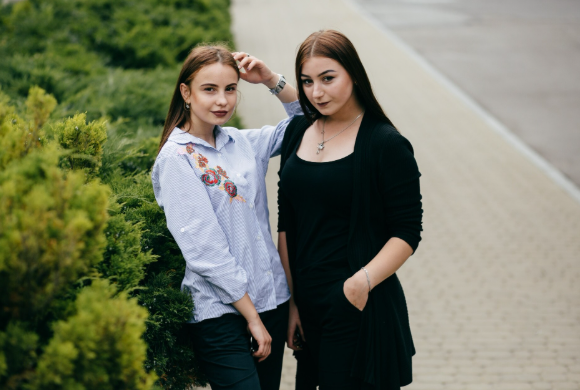
On March 20, 2026, Naieya turned 21. That same week, her father was getting ready for his comeback bout at The O2 in London against Derek Chisora. The timing created the kind of emotional weight that Wilder’s career has always had, but it wasn’t fortuitous in any narrative sense. The bout was a part of his continuous comeback to the ring following the heavyweight division’s transformation due to Fury’s defeats.
The more intimate milestone was the birthday. Wilder commemorated it with an Instagram post that highlighted her tenacity and mentioned that she had just earned her driver’s license, a seemingly insignificant accomplishment that takes on new significance for someone whose mobility was once thought to be permanently limited.
Observing how Wilder has discussed Naieya over the past 20 years gives me the impression that the public version of his story contains more nuance than the typical “athlete’s family inspiration” narrative typically permits. The dream of boxing was never realized. The method was boxing.
Wilder created a unique type of public figure by becoming one of the most successful American heavyweights of his generation while never quite allowing the audience forget that the original goal was to pay for a child’s care. Officially, Wilder’s career is still ongoing.
Officially, Naieya is an adult. By his own wording, the first promise—that her father would be a champion and able to support her beyond her beliefs—has been repeatedly exceeded. Outside the ring, the more difficult part—keeping that commitment as the father and daughter grow into various phases of their lives—continues in silence.