O’Connell Street smelt like wet tarpaulin and diesel on day four. Tractors, lorries, and pickup trucks flying tricolors lined both sides of the nation’s widest boulevard, which was named for Daniel O’Connell, the 19th-century nationalist who once organized hundreds of thousands at “monster meetings” demanding reform. The engines of these vehicles occasionally turned over in the cold. A truck with a hand-painted coffin on the trailer and signs in the cab window that said “Easter 2026” and “RIP Ireland” had been parked next to the Spire, a huge stainless steel monument to modernity. The allusion to 1916 was intentional. The surrounding buildings still bear the scars of that rebellion, which was initially very unpopular with many Dubliners due to the turmoil it produced.
Convoys of haulage and agricultural vehicles began obstructing Ireland’s biggest roads on Tuesday, April 7, sparking the demonstrations. In a few of days, they had blocked the M50 in Dublin, fuel depots in Limerick and Galway, Rosslare Europort in Wexford, and Ireland’s sole oil refinery at Whitegate in County Cork. By Friday, gas stations began to run low in some places. Parts of the Luas tram system’s network experienced service suspensions. Parts of the closed M50 were walked by travelers on their way to Dublin Airport. The government seemed unable to decide how to react for the majority of the week since it had neither anticipated nor prepared for the scope of what transpired. After denouncing the protesters and threatening to deploy the army, ministers discreetly started negotiating concessions that they had earlier deemed superfluous.
Important Information
| Field | Details |
|---|---|
| Event | 2026 Irish Fuel Protests — National Fuel Protest, Ireland |
| Start Date | Tuesday, April 7, 2026 — began with slow-moving convoys; escalated to blockades |
| Duration | Seven days — blockades cleared by Gardaí on Sunday, April 12; rolling protests continued Monday, April 13 |
| Key Locations Blockaded | O’Connell Street (Dublin); M50 motorway (Dublin); Whitegate oil refinery (Co. Cork); Foynes Port (Co. Limerick); Rosslare Europort (Co. Wexford); Galway docks |
| Government Response | €505 million support package announced Sunday, April 12 — excise duty cuts extended to July 31, further 10 cent reduction per litre of petrol and diesel; carbon tax rise delayed |
| Prior Package | €250 million excise relief approved approximately three weeks earlier |
| Underlying Cause | Oil price shock from closure of Strait of Hormuz during U.S.-Israel conflict with Iran; fuel prices up approximately 20% in one month |
| Taoiseach | Micheál Martin — described protesters’ tactics as “wrong” while announcing the concessions |
| EU Dimension | Ireland’s EU Commissioner Michael McGrath raised issue at European Commission emergency meeting — seeking flexibility on excise duty rules |
| Public Support | 56% of survey respondents supported the protesters |
| Political Consequences | No-confidence motion tabled April 12 by Sinn Féin, Labour, Social Democrats, People Before Profit, Aontú, Independent Ireland |
| Complicating Factor | Far-right figures and international commentators amplified protests; some speakers linked to anti-immigrant and extremist views |
There was a definite and pervasive underlying grievance. Following the U.S.-Israel military conflict with Iran, the closure of the Strait of Hormuz caused an oil price shock that particularly affected Ireland, a nation that relies heavily on road transportation, has little public transportation outside of Dublin, and produces no energy worth mentioning domestically. In just one month, fuel prices had increased by about 20%. Truck drivers weighing diesel costs against delivery contracts, farmers paying to operate tractors, fishermen filling boat tanks, and rural households heating their homes were all instantly and directly impacted. The protesters’ grievance that the government was refusing emergency help while imposing 60% fuel tariffs and taxes went far beyond the agrarian community. According to a midweek survey, 56% of participants supported the demonstrators.
Early on Sunday morning, the Public Order team, mounted units, a helicopter, and a water team patrolling the Liffey below joined the Gardaí. They escorted the trucks and tractors off O’Connell Street. A military vehicle destroyed a temporary barricade at the Galway docks. Protesters in Limerick decided to take a stand. By Sunday afternoon, Taoiseach Micheál Martin was announcing a €505 million support package, which included prolonged excise duty reductions, an additional 10 cent per litre decrease, and a postponement of the carbon tax increase, in addition to the €250 million excise relief that had been agreed upon just weeks previously. The package, according to Martin and Tánaiste Simon Harris, was not a reaction to the blockades but rather the result of organized interaction with official representation groups. Senior government officials informed reporters in private that the disruption had undoubtedly impacted the intervention’s scope and timing.
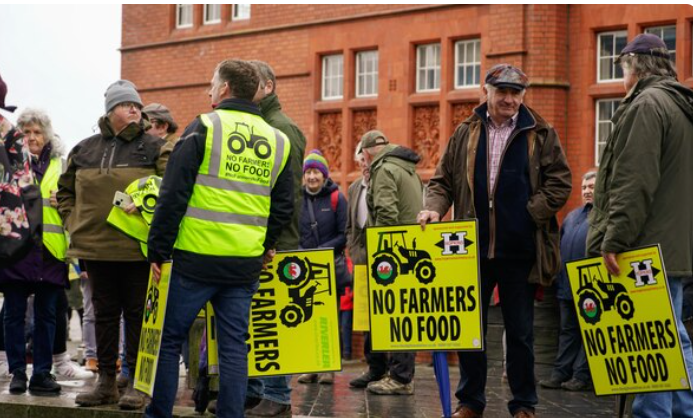
It would be dishonest to act as though the protests were a pure political story. Misogynistic vocabulary, extreme material, and anti-immigrant theories were all promoted by several of the voices at the front of gatherings. Tommy Robinson’s posts from overseas, Canadian pundit Ezra Levant’s trip to Ireland, and Conor McGregor’s use of the occasion to resurrect his own anti-immigration campaigns were examples of international amplifiers who joined the movement and obscured any consistency in its initial objectives. It was out that one spokesman had been convicted of abusing and neglecting farm animals. The Fianna Fáil–Fine Gael coalition is unlikely to be overthrown by a no-confidence motion put forth on April 12 by a number of opposition parties, including Sinn Féin, Labour, Social Democrats, People Before Profit, Aontú, and Independent Ireland. However, the week’s events have left the government clearly damaged, and Ireland’s EU presidency is coming up in less than 12 weeks.
Beneath all of that, the Dublin fuel protest revealed a systemic weakness that cannot be fixed by lowering excise taxes. For decades, Ireland’s reliance on fossil fuels, road transportation, and an unstable worldwide oil supply has grown as successive governments issued studies and pledged changes. The image of a young agricultural contract worker sleeping in his tractor cab on O’Connell Street in the bitterly cold April weather, too young to cast a ballot in the most recent election, and witnessing politicians rush to address a crisis they had spent years refusing to prevent, likely captures something more enduring than the political fallout from a single week.