The tension between institutional authority and student protest has been growing on the campus of the University of Manchester, a large urban university in the center of a city with a long history of labor organizing, political dissent, and street-level activism. This tension has been tested at universities throughout the United Kingdom. What started out as protests and campus occupations against the university’s financial and academic connections to Israeli universities and arms companies has evolved into legal actions, a suspended student, a revoked visa, and a national dialogue about the precise boundaries between legal protest and disciplinary violations in British higher education.
The particular legal case at the heart of the conflict concerns a student who was suspended following a string of actions related to the campus pro-Palestinian movement, including the release of a video of the vice-chancellor of the institution. According to the university, it is looking into acts that violate its rules. The suspension has been described by student organizations and civil liberties advocates as a part of a larger pattern of institutional action against activists, including surveillance, disciplinary actions, and administrative pressure that are used selectively against pro-Palestinian voices rather than uniformly across all political speech on campus. The institution has refuted that description, characterizing its actions as required reactions to behavior that goes against campus rules rather than as statements of personal preference.
| Category | Details |
|---|---|
| Institution | University of Manchester |
| Location | Manchester, England, UK |
| Core Dispute | Suspension of pro-Palestinian activist students |
| Protest Focus | University ties to BAE Systems and Israeli universities |
| Legal Action | Lawsuit over student suspension (including recording of Vice-Chancellor) |
| Visa Case | Dana Abu Qamar — visa revoked following comments on the conflict |
| Student Allegation | “Worsening crackdown” — surveillance and discipline targeting activists |
| University Position | Balancing protest rights with campus safety and regulations |
| Broader Context | Part of UK-wide wave of campus pro-Palestinian protests |
| Reference Website | manchester.ac.uk |
The demonstrations’ main demand is that the University of Manchester cut academic ties with Israeli universities and dissolve its relationship with the British defense giant BAE Systems. In addition to placing the protests within the larger framework of Boycott, Divestment, and Sanctions, which has served as the organizing principle of Palestinian solidarity campaigns around the world, these demands raise the particular question of whether a university’s commercial and academic relationships constitute political conduct that students can lawfully contest through public pressure, occupation, and protest. The university’s disciplinary measures against demonstrators can be interpreted as a sign of the extent of institutional tolerance for the campaign, and it has not stated that it plans to comply with these demands.
The British Home Office and the university administration are both involved in the Dana Abu Qamar affair. A student named Abu Qamar had her visa revoked after making public remarks regarding the Gaza crisis; she then challenged this decision. The revocation of the visa raises concerns about immigration enforcement and free speech for international students, a group that is both financially important to UK universities and especially susceptible to actions that impact their legal status in the nation. These concerns extend beyond campus disciplinary procedures. The Manchester problem is more complex than a simple campus free speech argument because of the combination of local student disciplinary cases and an international student’s immigration situation.
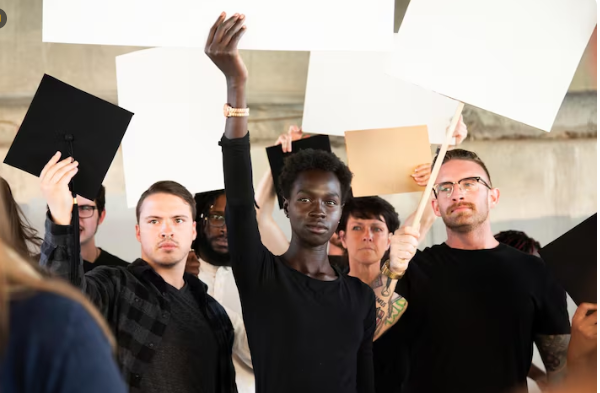
Manchester’s situation is not unique. Since October 2023, university relationships with Israeli defense companies and institutions have been the target of campus protests throughout the United Kingdom. Occupations at Oxford, Cambridge, Edinburgh, and several other universities have resulted in a variety of institutional responses, from negotiated agreements to disciplinary action. The legal and normative frameworks for distinguishing between behavior that can be lawfully restricted on a university campus and protected protest have not been definitively established, and various institutions have been coming to differing conclusions about where those lines lie, sometimes within weeks of one another. In Manchester’s instance, the courts are now being asked to help with that clarification.
In the midst of this controversy, the idea of academic independence is awkwardly positioned. The Higher Education (Freedom of Speech) Act 2023 made universities’ statutory duties to safeguard free speech on campus more clear and legally binding. These liberties are at least partially invoked by the students who contend that the suspension amounts to a repression of political expression. The institution is using its power to control campus activity by claiming that its disciplinary action is a response to behavior that violates rules. The courts are in a better position than administrators under duress to determine whether the release of a Vice-Chancellor’s recording qualifies as free political expression or a violation of institutional norms that warrants disciplinary action.
There is a sense that the post-October 2023 campus protest moment is creating legal precedents that will influence how institutions respond to political activism for years after the immediate conflict that sparked the protests has either resolved or faded from the front pages, as this case develops alongside similar disputes at universities across Britain and the United States.