When the official White House app debuted in early 2026, it was presented to the public as a “unfiltered” news source, a direct line of communication between the administration and its supporters and curious individuals that avoided the media outlets the administration had labeled as hostile. People who desired White House communications free from what they perceived as editorial intervention were the target audience, and the framing was simple enough to attract them. Get the information directly from the source by downloading the app. For a communications tool, that is a fair pitch. As a description of software that, according to a security analysis of its Android version, sends users’ exact GPS positions to external servers every 4.5 minutes when active and every 9.5 minutes when operating in the background, it is a little less plausible.
A GPS tracking pipeline linked to the third-party company OneSignal was discovered during the security study, which entailed decompiling the app’s Android code to look at its actual functionality rather than its declared purpose. A journalist attending a Trump administration event, a critic who downloaded the app out of curiosity, or a government employee who installed it at their organization’s recommendation are all transmitting their physical location at about the frequency of a commercial GPS tracker because the pipeline not only records location for internal purposes but also sends precise coordinates to external servers at the specified intervals. Users were not informed that the app was a location tracking tool. It was referred to be a news outlet.
| Category | Details |
|---|---|
| Topic | White House App — Location Tracking and Surveillance Capabilities |
| App Status | Official White House application, launched early 2026 |
| Tracking Frequency (Active) | GPS coordinates sent every 4.5 minutes |
| Tracking Frequency (Background) | GPS coordinates sent every 9.5 minutes |
| Third-Party Tracking Firm | OneSignal |
| Additional Capabilities | Biometric/fingerprint access, internal storage modification |
| Data Sharing Policy | Terms allow sharing with other government agencies |
| Built-In Feature | ICE tip line |
| App’s Marketing | Promoted as “unfiltered” White House news source |
| Security Method | Android APK decompilation (code analysis) |
| Reference Website |
The decompiled code revealed more than just location tracking. According to the analysis, the app can alter internal storage and access user biometrics and fingerprints. These features are technically present in a variety of applications, but when combined with real-time location transmission in a government communications app, they create a surveillance profile that security researchers have described as remarkably extensive for something marketed as a content delivery platform. The majority of users accept the terms of service without reading them, and they contain language that allows the information gathered to be shared with other government agencies. The Immigration and Customs Enforcement reporting mechanism, or ICE tip line, is an integrated feature of the app that provides detailed information about the intended link between the app and users’ surroundings.
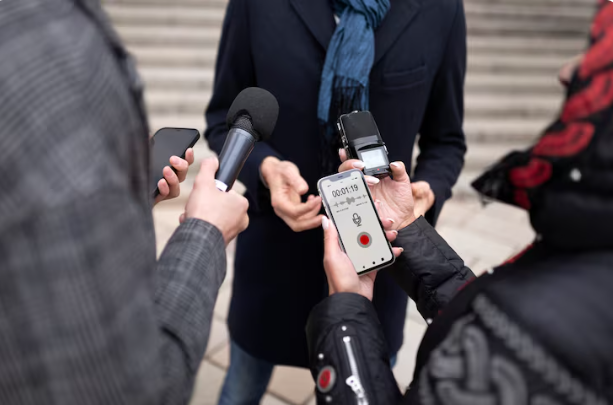
Press freedom organizations have responded most immediately to the dimension of journalist surveillance. If the security analysis is correct, reporters covering White House events or administration activities who download the app—whether out of a professional duty to keep an eye on official communications, curiosity about its content, or accidental installation—are sending their real-time location to external servers at intervals that would enable the creation of comprehensive movement records. A system linked to government infrastructure receives information from a journalist who goes to a particular event, visits a particular source, or shows up somewhere the administration might prefer they don’t. Legally, it matters whether the data is being actively monitored or is just being gathered in a database, but practically speaking, it doesn’t matter.
This app’s launch context is very important. Restrictions on media access, the revocation of credentials for certain journalists, and official rhetoric characterizing established media organizations as adversaries of the public interest have all been hallmarks of the Trump administration’s relationship with the press. In that scenario, an app that passively gathers location data from journalists who install it creates a different risk calculation than the same technical capacity in a different political setting. OneSignal is primarily a platform for audience segmentation and push notifications, and location-based notification targeting is a typical commercial use case, so it’s probable that the location tracking feature was included for ordinary marketing objectives. It’s also possible that the capability was added with a more thorough understanding of who would install the app and what data it would provide. The intent is not shown by the code. It displays aptitude.
Since the security analysis went viral, privacy advocates have voiced these concerns, and organizations like the Committee to Protect Journalists have advised reporters about the dangers of installing the application. The technical findings have not received a detailed response from the government. It is still genuinely unclear whether the location data being gathered is subject to any legal restrictions on its internal use, whether those restrictions would be enforceable, and whether the data is already being used in any monitoring of people who have come to the administration’s attention for other reasons.
The particular combination of features, such as real-time GPS, biometric access, ICE tip line, and government data sharing provisions, gives the impression that this application was not created primarily as a communications tool.
5 / 5