When oil prices surpass $100, a certain amount of stress arises. It’s not just a number—it’s a signal. Screens in trading rooms flicker a little brighter, conversations get shorter, and somewhere in the background, there’s an awareness that this rarely ends quietly.
As of mid-March 2026, WTI is close to $95 and Brent crude is between $102 and $106 per barrel. Those figures appear to be a continuation of a trend on paper. They actually feel more like a cautionary tale. Prices have surged roughly 70% this year alone, and the pace of that climb hasn’t gone unnoticed.
Key Information About Crude Oil Prices (March 2026)
| Category | Details |
|---|---|
| Brent Crude Price | ~$102.69/barrel |
| WTI Crude Price | ~$95.67/barrel |
| Murban Crude | ~$111.32/barrel |
| Annual Increase | ~+70% in 2026 |
| Key Driver | Strait of Hormuz disruption |
| Global Supply Impact | ~20% of oil flow affected |
| Market Condition | High volatility |
| Major Beneficiaries | U.S. shale producers |
| Key Risk | Middle East conflict escalation |
| Official Reference | https://www.iea.org |
The trigger, at least for now, is clear. The Strait of Hormuz—one of the most critical shipping routes in the world—has effectively been disrupted. Nearly 20% of global oil supply passes through that narrow stretch of water. It’s difficult to ignore how vulnerable the system is when you watch ships halt or reroute.
In ports across the Gulf, tankers sit anchored longer than usual, crews waiting for clearance or new instructions. The delays ripple outward, affecting refineries, distributors, and eventually consumers. It’s a slow-moving chain reaction that intensifies rapidly.
There’s a sense that the market is reacting not just to what has happened, but to what might happen next. Attacks on tankers, rising tensions involving Iran, and uncertainty around regional stability have created a backdrop that feels unpredictable. Supply risks are now perceived by investors as imminent rather than speculative.
It’s remarkable how stable prices have maintained in spite of market stabilization initiatives. Plans to discharge 400 million barrels from emergency stockpiles have been revealed by the International Energy Agency. That kind of intervention would reduce pressure under normal conditions. It hasn’t had the same impact this time.
It’s possible that the interruption is just too big. It is more difficult to close the gap when large producers cut back on output, whether out of necessity or design. The market, sensing this imbalance, adjusts quickly—and often aggressively.
Meanwhile, in places like Texas and North Dakota, U.S. shale producers are experiencing something close to a boom. Fields that once operated cautiously are now ramping up, trucks moving steadily across dusty roads, equipment running longer hours. Strong cash flows are a result of high prices, and operators are quietly confident.
But even that optimism carries a note of caution. The industry has been through cycles before—rapid expansion followed by sharp corrections. It’s still unclear whether this surge will lead to sustained growth or another period of volatility.
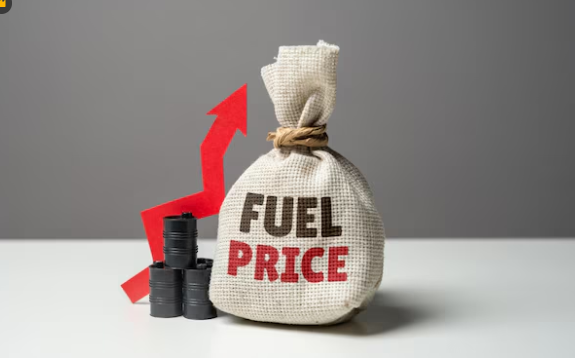
The wider economic impact must also be taken into account. Transportation costs, production costs, and even food prices are all impacted by rising oil prices. Over time, this pressure has the potential to change consumer behavior since it is gradual yet persistent.
Walking through a busy market, where delivery trucks idle and prices on everyday goods inch upward, the connection becomes tangible. Oil isn’t just a commodity traded on screens; it’s embedded in daily life in ways that are easy to overlook until costs start to rise.
The possibility of oil reaching $150 or even $200 per barrel has started to enter conversations. Not as a prediction, exactly, but as a scenario that no longer feels impossible. Analysts mention it carefully, almost reluctantly, aware of how such numbers can shift expectations.
This has a historical resonance. Previous spikes—during wars, crises, or supply shocks—have often led to broader economic consequences. policy changes, decreased growth, and inflation. The pattern isn’t identical each time, but the themes are familiar.
The energy landscape has evolved concurrently. Renewable sources are more prominent, electric vehicles more common, and efficiency measures more widespread. Yet, despite these changes, oil remains central. Its influence hasn’t diminished as much as some once expected.
It’s hard not to notice the contrast between technological progress and energy dependency. While innovation continues to reshape industries, the fundamentals of supply and demand still hold sway. Oil, in many ways, sits at the intersection of these forces.
Looking ahead, the path for crude prices feels uncertain, though not directionless. Much depends on geopolitical developments—whether shipping lanes reopen, whether tensions ease, whether production stabilizes. Each of these factors carries weight, and none are entirely predictable.
There’s a feeling that the market is bracing for continued volatility, even if prices stabilize temporarily. The current levels, just above $100, may not represent a peak so much as a plateau.