The courtyard outside the university’s historic stone buildings appears nearly timeless on a gloomy Oxford morning. Bicycles rest against railings. Students hurry past with coffee mugs. There is no indication of financial warfare in the scene. However, a machine learning model is subtly influencing how billions of dollars flow across international markets somewhere behind those ancient barriers.
The Oxford-Man Institute of Quantitative Finance, which tends to draw mathematicians and data scientists who approach markets in the same manner that physicists approach particle motion, is where the research originated. Their concept, an artificial intelligence system built to read limit order books—the ever-changing lists of buy and sell orders that lie behind every stock market transaction—sounds very sophisticated. However, the model’s function is easier to understand in terms of hedge funds. It forecasts extremely short-term changes in pricing.
| Category | Details |
|---|---|
| Technology | AI Model for High-Frequency Trading |
| Developed By | Researchers at the Oxford-Man Institute of Quantitative Finance |
| Key Application | Predicting short-term stock price movements |
| Prediction Window | 30 seconds to 2 minutes |
| Estimated Accuracy | Around 80% in short-term forecasts |
| Supporting Organization | Man Group |
| Specialized Hardware | Graphcore Intelligence Processing Unit (IPU) |
| Industry Use | Hedge fund trading optimization |
| Reference | https://www.oxford-man.ox.ac.uk |
The duration is between thirty seconds and two minutes, which is almost ridiculously short. However, the algorithm is said to estimate price direction with an accuracy rate of about 80% inside that little window. That figure may be alarming to traders who have spent decades gazing at charts.
When you visit a New York trading floor, the atmosphere is less glitzy and more utilitarian. Price ladders flash faster than the eye can easily follow as screens light in tight rows. Coffee cups are stacked next to keyboards. Every now and then, someone murmurs about a dramatic swing in price, breaking the silent focus that permeates the room. Software like this is increasingly being used in that room during the decision-making process.
The model operates by handling financial data in a manner similar to natural language processing, which is the main idea behind text or speech interpretation systems. The program reads order flows rather than sentences. Purchase orders show up. Sell orders disappear. Prices fluctuate a little. Each movement becomes part of a pattern the system learns to recognize. It’s probable that speed, rather than just prediction, is what gives the model its exceptional power.
To speed up machine learning computations, researchers employed customized hardware called Graphcore’s Intelligence Processing Unit. It may not seem important, but that detail is crucial. Milliseconds determine whether a plan succeeds or fails in high-frequency trading. It is possible to subtly outmaneuver rivals with a slightly speedier system. Hedge funds have taken note.
Man Group, a multinational investment corporation that oversees assets worth over $100 billion, is one of the main sponsors of the Oxford study. Even little improvements in trade execution can result in significant financial benefits for businesses operating at that size.
Consider a fund that wants to purchase millions of shares in a big business. Prices may increase instantly if the order is placed all at once, increasing the cost of the purchase. Traders can more effectively slip huge orders into the market by breaking them up into smaller parts with the use of AI algorithms that examine order books. Changing rather than completely vanishing.
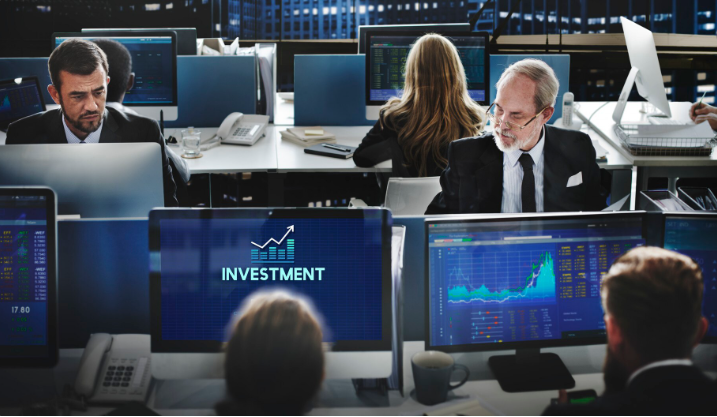
In the past, traders mostly depended on experience—the ability to sense the mood of the market subtly, an instinct honed by thousands of trades. A portion of such ability is still important. However, AI systems are now able to process amounts of data that are too large for humans to handle in real time. The Oxford model seems to be part of a larger change that Wall Street is already experiencing.
According to reports, a few of AI-driven hedge funds generated total returns of nearly 34% between 2017 and 2020, while the industry as a whole earned returns of about 12% during the same time frame. Institutional investors, who typically notice performance long before philosophical discussions about technology, were drawn to the discrepancy.
Many AI systems used in finance function as “black boxes,” making predictions without providing a clear explanation of how they arrived at them. This lack of openness can cause discomfort for banks and regulators. In an effort to improve the interpretability of algorithmic conclusions, certain businesses associated with the Oxford ecosystem, such as Oxford Algorithms Ltd., have started investigating explainable AI.
It’s still unclear if authorities are completely satisfied with that attempt. In the meantime, Oxford and the finance sector are becoming closer. An AI research lab at the university has received millions of pounds from the massive Swiss bank UBS. And the Oxford Saïd Business School now provides training programs exclusively focused on artificial intelligence in trading.
A weird mix of people can occasionally be seen walking through those classrooms: young data scientists, seasoned portfolio managers, and the occasional doubtful banker attempting to comprehend the machines that might eventually surpass them. The change has a subtle dramatic quality.
Wall Street legend honored the individual trader—the astute thinker who could spot opportunities in volatile markets—for many years. Movies and financial memoirs continue to use that image. However, algorithms operating silently on powerful processors are becoming more and more common in today’s trading organizations.
It’s hard not to wonder where the balance will eventually fall when systems like the Oxford model proliferate. The strategies are still created by humans. They choose which markets to enter, how much capital to risk, and when to withdraw. However, once trading starts, the important micro-decisions are frequently made by robots.