Nearly every figure skating competition has a time right before a leap when the arena becomes silent. The crowd holds their breath, the music slows a little, and blades scrape the ice. Watching Alysa Liu, that moment often feels different. Her small stature of five feet three inches makes her appear almost fragile against the expansive white expanse. A few seconds later, however, she is spinning through the air and landing with a confident, sharp edge that suggests something far bigger than her height.
Surprisingly frequently, the topic of Alysa Liu’s height comes up when discussing the Olympic winner. She is not abnormally short by common standards at 1.61 meters, but in elite athletics, physical features suddenly become more important. Centimeters can alter the physics of a jump in figure skating, impacting balance and rotation speed. It’s difficult to ignore how compact Liu’s motions seem as you watch her glide over the rink with her shoulders relaxed and her arms poised—tight revolutions, swift takeoffs, and effective landings.
| Category | Details |
|---|---|
| Full Name | Alysa Liu |
| Birth Date | August 8, 2005 |
| Birthplace | Clovis, California, United States |
| Height | 5 ft 3 in (1.61 m) |
| Sport | Figure Skating – Women’s Singles |
| Olympic Achievement | 2026 Winter Olympic Champion (Individual & Team) |
| World Titles | 2025 World Champion |
| Education | University of California, Los Angeles |
| Skating Club | St. Moritz Skating Club, Oakland |
| Reference |
Born in Clovis, California, in 2005, Liu started skating in the Bay Area as a young boy. Her training facilities were nice, fluorescent-lit structures nestled amid suburban streets, but they didn’t exactly shout Olympic destiny. However, coaches who observed her practice at the time frequently remember the same detail: she spun more quickly than most children her age. This can be aided with a tiny frame, which enables skaters to quickly draw into leaps and spin like a top. However, the harsh structure of competitive skating rarely allows inherent talent to survive on its own.
Liu’s actions at the age of 13 caused a stir in the American skating world. She became the youngest national champion in American women’s history. There is an odd energy about the moment as I watch the broadcast. She was doing jumps that even seasoned skaters occasionally find difficult to land cleanly, complete with braided hair and a young smile. It was thrilling but also a little unbelievable, as though the sport had subtly changed over night.
Part of the reason her height altered so quickly during those early years was that it became a talking point. Liu went from roughly 139 centimeters to 152 centimeters in a comparatively short period of time, exhibiting a remarkable growth spurt. Growth spurts can cause chaos in figure skating. The balance shifts. The timing shifts. The leap that was once effortless now feels strange. After that point, some skaters never fully recover.
Even experienced observers were taken aback by Liu’s apparent adaptations. She kept making challenging jumps, including combinations that several competitors completely ignored. She was one of the few female skaters to attempt both a quad and a triple Axel in the same program, and at one point she became the first American woman to land a quadruple leap in competition.
The danger becomes clear when you watch competitors attempt those aspects from a rink. The takeoff is violent. Precision is required for the landing. After making a single error, the skater slides across the ice, recovering from the pain before attempting again. It frequently appeared strangely serene as Liu spun through those spins.
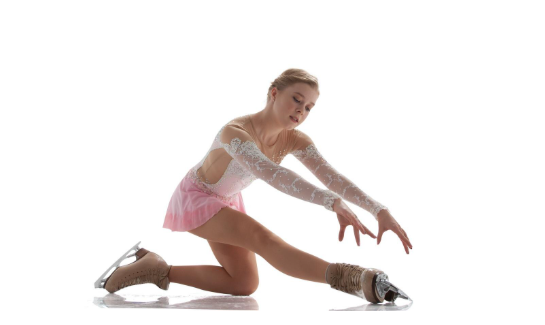
Something about her presence seemed more mature by the time the 2025 World Championships came along. Earlier in her career, she had taken a temporary hiatus from competition, which at the time confused admirers. However, her narrative took an unexpected turn when she returned to the sport and won the world title, making history as the first American woman to do so since 2006. The 2026 Winter Olympics followed.
Regular events don’t have the same atmosphere as the Olympic stadium. Bright lights bounce off the ice. Above the stands are flags. There are cameras everywhere. It was difficult to ignore Liu’s poise while seeing her skate there. Standing next to bigger competitors during introductions, she appeared diminutive at 5’3″. However, the scale changed after the program started. Her spins advanced swiftly, her jumps carried height, and the choreography progressed with a controlled intensity.
She won both a team gold medal and Olympic gold in the women’s singles division before the end of the competition. Her accomplishment discreetly put her in a unique group of American figure skaters. Liu’s triumph felt like a turning point for a nation that had previously dominated the sport but had gone years without a champion.
Interestingly, height was still a topic of discussion. According to some commentators, her explosive rotations were a result of her small physique. Some contended that mental discipline was significantly more important. Most likely, the reality lies in the middle. The mechanics can be explained by sports science, but there are always unknown human factors involved in competitiveness.
Liu’s life now strikes a mix between sports and more typical student life off the rink. She continues to compete internationally while attending the University of California, Los Angeles. Olympic champion in the winter and college student the rest of the year is an odd cadence, but maybe it keeps things grounded.
There’s a sense that the story isn’t quite over as you watch her career develop. Although skaters typically reach their peak at a young age, some continue to dominate the sport for years, changing as new generations come along.