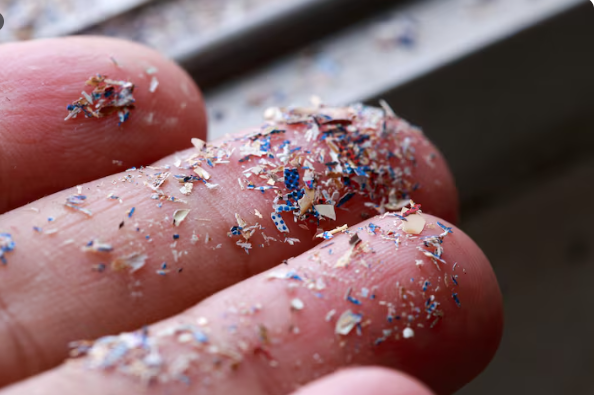
In contrast to most hospitals, NYU Langone Health’s lab spaces are peaceful. Wearing lab coats and gloves, researchers move cautiously between workstations and speak in measured tones. Thin slices of prostate tissue are being examined under a microscope on one table. It’s hard to overlook how troubling what the scientists found there is. Microplastics, which are tiny pieces of plastic, were implanted in the tissue.
The goal of the study, which was carried out by a group of researchers under the direction of Stacy Loeb, was to look into the possibility that microscopic plastic particles could build up inside human organs and possibly affect the development of cancer. Until recently, this idea seemed virtually hypothetical. Environmental experts have been finding microplastics in drinking water, soil, oceans, and even human air for years. However, there hasn’t been much evidence found inside the human prostate. Even the researchers were taken aback by the findings.
| Category | Details |
|---|---|
| Research Topic | Microplastics detected in human prostate tissue |
| Lead Research Institution | NYU Langone Health |
| Study Focus | Possible link between microplastics and prostate cancer |
| Key Finding | Microplastics detected in 90% of tumor samples |
| Sample Size | 10 prostate cancer patients |
| Average Plastic Levels | ~40 µg per gram in tumors vs ~16 µg in healthy tissue |
| Lead Researcher | Stacy Loeb |
| Presentation | American Society of Clinical Oncology Genitourinary Cancers Symposium |
| Reference |
Nine out of ten tumor samples that the scientists examined from ten men undergoing prostate cancer surgery had microplastic particles. Furthermore, compared to adjacent healthy tissue, the concentration inside malignant tissue seemed to be much higher. About 40 micrograms of plastic per gram of tissue were found in tumor samples, while noncancerous tissues had about 16 micrograms per gram.
These figures don’t instantly lead to a definitive medical judgment. Even still, their questions remain in the room long after the microscope has been switched off. These days, microplastics are ubiquitous. They originate from commonplace items that most people hardly ever consider, such as food packaging, synthetic apparel, cosmetics, and microwave-heated plastic containers. These substances eventually disintegrate into tiny particles that can dissolve in water sources or float through the atmosphere.
They eventually enter the human body. Some people get in through food. Others enter the lungs as airborne particles. Some might even penetrate the skin. Previous research has already shown microplastics in the placenta, blood, and lungs during pregnancy. Like detectives tracking an environmental trace inside the body, scientists have been measuring their presence. However, the fact that they are found inside prostate cancers adds a concerning element.
Inflammation, a biological reaction that can subtly change tissue over time, is one explanation. The immune system responds to foreign particles that enter the body. That reaction can sometimes be swiftly resolved. At other times, it persists, resulting in a gradual cycle of irritation and healing. Microplastics may cause precisely that kind of reaction.
The development of cancer in a number of organs has long been associated with chronic inflammation. Cells that are damaged try to regenerate. Errors in DNA accumulate. Tumor growth may result from those alterations over time. Though the theory is gaining traction, it is still unclear if microscopic plastic fragments could play a role in that process. The investigation was tackled cautiously by the researchers.
The scientists substituted typical plastic tools with replacements made of cotton and aluminum since plastic contamination can readily develop during laboratory operations. Clean-room settings created especially for microplastic analysis were used to evaluate tissue samples. Every piece found was quantified, chemically characterized, and compared between samples.
The endeavor is a reflection of scientists’ increasing awareness that environmental contaminants that were previously believed to be innocuous may have complex interactions with human biology. In and of itself, prostate cancer is not uncommon. Approximately one in eight American men may receive a diagnosis of the illness at some point in their lives, according to public health data. Decades of research into genetics, lifestyle factors, and environmental exposures have been motivated by that number alone.
Another potential piece to the puzzle is the finding of microplastics within prostate tissue. As the larger discussion about plastic pollution develops, it appears that the problem has subtly transcended oceans and species. Sea turtles entangled in plastic debris or beaches covered in abandoned packaging were the focus of environmental initiatives for many years. Although such pictures were strong, they also kept the issue at a safe distance.
The distance is getting closer now. Researchers are starting to suspect that the same substances that float in rivers and seas might also be moving through human organs. The amount of plastic produced globally—hundreds of millions of tons annually—makes total avoidance nearly unattainable. However, researchers advise caution.
The NYU Langone study involved a small number of patients, making it more of an early signal than a clear response. To determine whether microplastics regularly occur in prostate tumors and whether they directly contribute to the development of cancer, more extensive research will be required.
The group intends to carry out more research on the behavior of these particles within human tissue. Do they build up over decades? Are some plastics more dangerous than others? The most challenging question of all is probably whether the body can eliminate them once they become entrenched in organs.
It’s hard to avoid feeling a little uneasy when you’re inside the lab and staring at those small particles under magnification. Plastic used to be hailed as a wonder material because it was inexpensive, strong, and incredibly useful. It remains thus. However, the same characteristics that make it essential also enable it to endure for centuries in the environment.