In the mid-1980s, Paul Hogan came into global consciousness like he had wandered out of the outback itself. His weathered charm and twinkle-eyed boldness in Crocodile Dundee didn’t only entertain—it helped define an era of Australian film exports. Hogan received something far more important than transient celebrity as a result of the film’s unexpected financial success: leverage.
Hogan took a chance, in contrast to many stars bound by studio contracts. He self-financed and co-distributed the original Crocodile Dundee, collecting a staggering 60% of the film’s profit. With nearly half a billion dollars earned globally between the first two movies, the arrangement transformed him into a very wealthy guy. At his financial peak, his net worth allegedly approached $75 million—a tribute to instinct meeting opportunity.
| Name | Paul Hogan |
|---|---|
| Born | October 8, 1939 – Parramatta, New South Wales, Australia |
| Occupation | Actor, Comedian, Writer, Producer |
| Known For | Crocodile Dundee series |
| Peak Net Worth | $75 million (estimated) |
| Current Net Worth | $20 million (estimated, 2025) |
| Key Events | Oscar-nominated screenwriter, major tax settlement with ATO, high-profile divorces, property sales |
| Reference |
But fortunes are not fixed. They change as a result of life’s inevitable problems, sometimes in subtle ways and other times in dramatic ways. Hogan’s decades-long dance with fortune has included enviable home sales, litigation sagas, and more than one scandal concerning offshore banking. Before he sold his mansion to Chris Hemsworth in 2014 for an estimated $4.8 million, he lived next door to celebrities in Malibu.
The current estimate of Hogan’s net worth has significantly decreased to about $20 million. This reduction, while still leaving him comfortably wealthy, came through a succession of public and private financial decisions. Most famously, Hogan spent nearly ten years involved with the Australian Taxation Office in a bruising argument that felt as much about pride as mathematics.
Hogan was involved in Operation Wickenby, a vigorous campaign against tax evasion through foreign trusts and shell corporations, in 2003. Accusations alleged that Hogan, along with colleagues, had shifted tens of millions of funds made from Crocodile Dundee through Swiss banks and offshore corporations. Hogan, on the other hand, responded vocally. He famously equated the ATO to the Taliban and labeled its agents “a-holes” in a series of interviews that, although humorous, showed deeper discontent.
The case grew more personal in 2010 when Hogan flew back to Australia for his mother’s burial and was immediately served a Departure Prohibition Order. Until his tax problems were fixed, he was unable to travel. Officials said at the time that Hogan owed taxes on more than AU$37.5 million in unreported income. For a man who had previously converted rough bushman appeal into Hollywood cash, the bureaucratic trap felt especially harsh.
After mediation, Hogan and the ATO came to a private deal in 2012 without acknowledging any wrongdoing. The ban on travel was removed. However, by then, Hogan’s previously unrestricted access to revenues had been noticeably limited, and legal bills had piled high. Hogan claimed years later that more than $30 million had been stolen from a Swiss account by a former advisor. The financial maze grew as a result of his unsuccessful legal attempts to recoup the money.
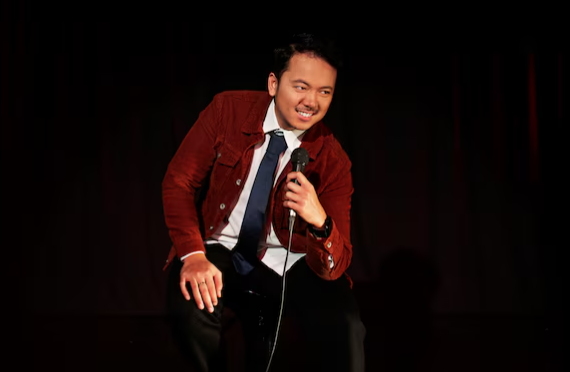
Hogan, however, maintained his composure in public. In a 2020 promotional interview for The Very Excellent Mr. Dundee, he jokingly poked fun at his legacy. His humor, particularly intact, suggested a man not vanquished, just weathered. He has continued to perform on occasion, most lately returning to stand-up comedy—a format that enables direct connection with fans and, perhaps more practically, some cash replenishment.
By pulling back from the Hollywood spotlight and divesting from high-profile properties, Hogan has gradually reshaped his lifestyle. Even if his financial situation has drastically decreased, it is still more than sufficient for quiet comfort. His handling of that change is extremely admirable, especially considering how many others would have crumbled under the same circumstances.
At one point during the tax inquiries, Hogan sued the Australian government, alleging his career had been irrevocably ruined. As I read the court document, I stopped when his attorney said that Hogan’s “earning potential had been decimated.” It struck me as both heartbreaking and true—how one probe can shadow a legacy, even if it ends in a quiet settlement.
Despite the legal challenges and personal losses, Hogan has notably avoided animosity in public appearances. His son Todd is the father of TV star Mylee Hogan, and he is now a grandfather. His children are still close. Something more lasting than wealth is implied by that generational bridge.