Today’s movement in Meta’s stock seems more like a recalibration than speculation. The shares are trading near their daily highs at $605, indicating that investors are still cautious but confident. As the statistics fluctuate, it seems as though the market is balancing two distinct narratives: a long-term wager on immersive technologies that still feels unfinished and a very lucrative advertising engine.
Social networking helped Meta Platforms establish its image, although the company’s identity has changed frequently. Facebook, which was formerly the main product, now coexists with Instagram, WhatsApp, and Messenger. Every platform is a part of an ecosystem that brings in huge sums of money via advertising. Despite privacy restrictions, Meta’s targeting capabilities are still regarded as some of the best, and discussions about them are common among digital marketing organizations.
Key Information About Meta Platforms
| Category | Details |
|---|---|
| Company Name | Meta Platforms, Inc. |
| Stock Ticker | META |
| Founded | 2004 |
| Headquarters | Menlo Park, California, USA |
| CEO | Mark Elliot Zuckerberg |
| Employees | ~78,865 |
| Industry | Social Media & Technology |
| Market Cap | ~$1.53 Trillion |
| Current Price | ~$605.15 |
| 52-Week Range | $479.80 – $796.25 |
| Official Website | https://about.meta.com |
Mark Zuckerberg, the company’s CEO, is still pushing for virtual reality and artificial intelligence. His public presentations frequently highlight long-term innovation, which occasionally elicits doubt. Although it’s still uncertain how soon those experiments will result in significant revenue, investors appear to think the main company can finance experimentation.
Measured optimism is reflected in the trading range, which is around $583 to $609 in a single session. Buyers’ willingness to intervene during drops suggests that they have faith in the fundamentals. However, the stock is still below its 52-week high of about $796, suggesting that market expectations have subsided. That gap suggests that there is still ambiguity.
Meta’s advertising engine is still very effective. Meta’s platforms are still used by small firms to contact clients when they begin campaigns from laptops in cafes. Choosing demographics, uploading photos, and tracking interaction all seem like standard procedures. It’s difficult to ignore how ingrained these technologies have become in regular business.
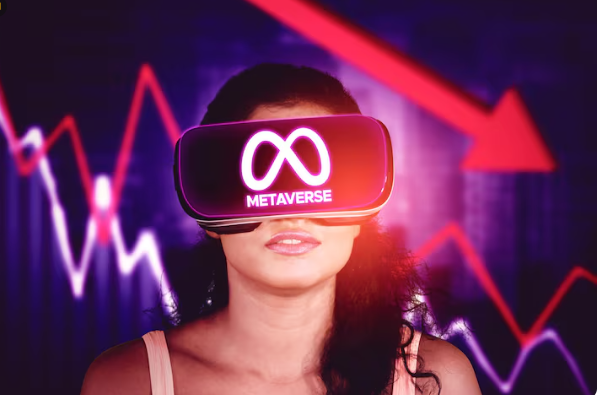
On the other hand, Reality Labs presents an other story. A longer-term goal includes immersive social spaces, mixed-reality trials, and virtual reality headsets. VR displays frequently pique customers’ interest when they enter electronics stores, but they don’t necessarily result in purchases. The adoption curve is still slow. Investors discuss if patience will be rewarded when they observe spending in this division.
For a tech powerhouse of this size, the valuation—a P/E ratio of about 25—seems reasonable. Meta trades at less aggressive multiples than several AI-driven businesses. Investors looking for stability might be drawn to this relative constraint. Expectations regarding AI integration, however, are still rising.
Meta’s products have subtly changed due to artificial intelligence. Machine learning plays a major role in content recommendations, ad targeting, and moderation systems. Scrolling via feeds, users frequently come across highly customized material. Although it can be disturbing at times, the experience feels smooth. People’s perceptions are shaped by algorithms, which have an indirect impact on revenue and engagement.
A trading volume near average indicates consistent institutional involvement. Meta’s maturity is shown in the stock’s lack of excessive volatility. However, opinion still changes in response to regulatory news or financial reports. Markets continue to be sensitive to changes in policy.
Regulation is still a common subject. Governments examine market domination and data methods. Periodically, there is uncertainty due to legal talks taking on in Washington and Brussels. Although significant decisions could change paths, investors seem to be used to this dynamic.
It’s difficult to ignore Meta’s cultural influence. Social interactions are shaped by the platforms, from influencer marketing to family group chats. The demand for advertising is supported by its ubiquity. All sizes of businesses rely on being visible in Meta’s ecosystem. There is a sense of mutual reinforcement in the relationship.
It’s common to hear comparisons to businesses like Alphabet. Both control digital advertising and make investments in emerging technology. However, Meta stands out because of its emphasis on social connections. Monetization tactics become more complex due to the emotional component—community, sharing.
Despite its modesty, dividend yield indicates financial maturity. In the past, IT companies preferred reinvestment above payouts. Meta’s readiness to repay capital indicates that they have faith in their cash flow. This could be attractive to investors looking for income.
The 52-week range shows how sentiment varies, ranging from about $480 to $796. Shares rose initially due to confidence in AI, but later saw declines. The stock now appears to be poised between growth and prudence, trading in the middle of the range.
Meta seems to be at a turning point in its history. The advertising industry is still robust, but the corporation wants to be relevant in new technologies. As both stories develop, investors appear to be cautiously supportive.
That equilibrium is reflected in the current price, which is close to $605. Not joyful, not gloomy. Meta is still developing, fusing bold technology bets with social media domination. It’s unclear if those wagers will change the company or just enhance its core operations, but the market seems prepared to wait.