In addition to introducing a new product line, Meta’s rebranding from Facebook aimed to completely change the way we communicate online. At the time, the metaverse was envisioned as a smooth virtual extension of our lives that combined work, leisure, and social interaction into a single, immersive environment. However, that ambitious target was subtly being trimmed by the end of 2025.
The cost of Meta’s internal recalibration was clear. With little market traction to show for it, the company has invested more than $73 billion in its metaverse branch, Reality Labs. The platform at the center of this campaign, Horizon Worlds, had trouble keeping customers since they frequently gave up on the glitchy, cartoonish interface after just one visit. At the same time, word of the cuts caused Wall Street to react very favorably. Investor mood clearly changed when Meta’s shares increased 7% after the company disclosed a 30% cut to the division’s budget.
Instead of a complete retreat, there was a redirection. Meta concentrated on incorporating the technology into gadgets that people really use rather than completely abandoning it. In particular, Ray-Ban smart glasses of the second generation have shown remarkable efficacy. Without requiring users to wear a headset on their face, these glasses provide a more approachable way to incorporate AI into everyday activities. They are sleek, voice-responsive, and fashionable enough to be worn in public.
While going through this adjustment, I couldn’t help but notice how Meta’s messaging has evolved. A few years ago, executives boldly compared the metaverse to the transition from desktop to mobile, portraying it as the next big platform change. The tone is different now. Efforts to develop the metaverse are being reframed as long-term investments that could change over the next ten to fifteen years. Meanwhile, Meta is stepping up its efforts to develop AI-enabled gadgets that provide quantifiable, instantaneous benefits.
| Category | Detail |
|---|---|
| Original Vision | A unified virtual space blending social, work, and commerce in VR |
| Total Losses | Over $73 billion in Reality Labs since 2020 |
| Budget Shift | December 2025: up to 30% cuts to metaverse division |
| New Focus | Smart glasses (Ray-Ban partnership), AI assistants, wearables |
| Market Reaction | Meta stock up 7% on cutbacks, signaling investor approval |
| Long-Term Plan | Spatial computing and AR still central to Zuckerberg’s future vision |
| Credible Source | BBC Coverage on Meta’s Shift |
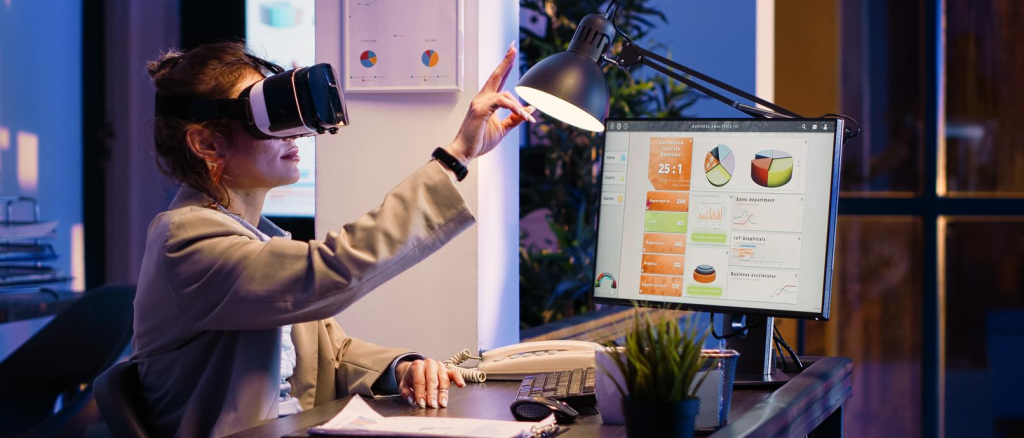
Some talented people have been drawn to that concentration. Recently, Alan Dye, who was Apple’s head of design, joined Meta to lead its hardware projects, demonstrating a fresh dedication to high-quality products. Additionally, it’s an indication of internal changes. Instead of investing in speculative virtual real estate, the company appears to be more focused on how AI can enhance the technologies we now use.
However, expenditure hasn’t decreased. In 2025, Meta plans to invest an astounding $72 billion, with an increasing portion of that amount going toward AI infrastructure, which includes anything from chips and supercomputers to collaborations with AI companies. This rerouting implies that the desire for futuristic domination has not diminished, despite the metaverse dream having faded.
The metaverse was never an attractive offer for a lot of users. Horizon Worlds felt fragmented and looked out of date. According to internal memos, Meta staff were also reluctant to use the platform due to ongoing glitches and interface problems. On the other hand, the new smart glasses offer immediate benefits. The experience is smooth and rooted in everyday convenience, whether you’re using conversational AI to recognize items, taking hands-free pictures, or asking for directions.
A significant change in approach is shown by this move from virtual immersion to tactile augmentation. Meta is focusing on real-world use cases instead of pursuing a parallel digital life. The metaverse might never fully reappear in its magnificent original form. However, some of its components—such as voice commands, gesture controls, and spatial awareness—are being incorporated into more popular and difficult-to-give-up technology.
As a result, financial markets have reacted. The cost-cutting initiatives raised hopes after months of pessimism. After the cuts, a stock that had previously been penalized recovered, gaining about $60 billion in value. This was a vote for pragmatism rather than merely investor relief. Product-market fit took the place of speculative narrative.
Mark Zuckerberg hasn’t given up on the main idea, though. The term “personal superintelligence,” which he currently uses to describe Meta’s future, is both promising and ambiguous. Meta is obviously rushing to shape the future with its recently established Superintelligence Lab and its $14.3 billion investment in Scale AI. Whether this next phase results in long-term profitability or merely another expensive experiment is yet to be determined.
Remarkably, Meta’s Quest headsets are still in use. They continue to serve specialized markets, particularly those who enjoy gaming and exercise. However, their future appears to be restricted to certain settings rather than widespread use. For brief amusement sessions, a headgear is excellent, but it doesn’t encourage the kind of daily dependency Meta aimed for.
Rather, the focus of the organization has moved to making technology feel more helpful and less intrusive. Without requiring users to log out of their real lives, Meta is progressively establishing a closer relationship with them by integrating intelligence into wearables like glasses. It might turn out to be a very creative method of adoption.
The underlying technologies that the metaverse helped develop—AR vision systems, AI interfaces, and ambient computing—are now being used more effectively, despite the metaverse’s setbacks. Meta can regain the public’s trust by eschewing the hype and adopting hardware that blends in subtly.