Members of Parliament convened in a committee room that still has a subtle scent of old paper and polished wood on a dreary morning in Westminster. The Thames flowed lazily and unconcerned outside. The topic of discussion inside was something far less expected: artificial intelligence and the unspoken fear that it could be assisting wealthy investors in making money off of company failure. Several times, the term “gaming insolvency laws” came up.
It’s possible that the concept would have seemed overblown only a few years ago. Insolvency was viewed as a chaotic but ultimately procedural legal process. MPs are now questioning if algorithms that operate in the background in private equity firms are making that process strategic. Something that is optimized.
Important Information Table
| Category | Details |
|---|---|
| Inquiry Authority | Treasury Select Committee, UK Parliament |
| Core Concern | Private equity firms potentially using AI to exploit insolvency laws |
| Key Regulators Involved | Bank of England, Financial Conduct Authority (FCA), HM Treasury |
| AI Adoption Rate | Over 75% of UK financial services firms using AI |
| Main Risk Identified | Disadvantaging creditors, amplifying financial instability |
| Regulatory Issue | Lack of AI-specific safeguards and oversight |
| Country | United Kingdom |
| Reference | https://committees.parliament.uk/committee/158/treasury-committee/ |
According to recent committee findings, nearly three-quarters of UK financial institutions are currently utilizing AI in some capacity. The tone seems to have changed only because of that number. Office skyscrapers in Canary Wharf are illuminated late at night, and analysts are looking at dashboards with charts that weren’t there ten years ago. It’s difficult to ignore the growing influence of software on decision-making. Software also acts without hesitation.
Timing has always been key to the success of private equity firms. Purchasing failing businesses, reorganizing them, and taking value out of them. However, AI brings size and speed that human judgment just cannot match. It can predict distress before executives fully understand it, scanning thousands of balance sheets in a matter of seconds. That advantage appears to be too important for investors to overlook.
The Treasury Select Committee is worried that AI may be spotting legal gaps before authorities have a chance to fix them. Algorithms may identify the exact point at which insolvency benefits some parties, influencing choices that hurt suppliers, employees, and creditors. Whether this is occurring on purpose or just arising from optimization logic is still unknown.
Two junior analysts look through financial models while having a calm conversation over coffee in a café close to Liverpool Street. They use phrases like “distress signals,” “timing windows,” and “asset repositioning” in short bursts. It sounds like clinical language. detached. Nearly a surgical procedure.
Insolvency used to develop gradually. Manufacturing facilities closing. Employees transporting boxes to their vehicles. Tape paper notices to doors that are locked. Now, the financial repercussions can be felt long before the lights are turned off.
The Financial Conduct Authority and the Bank of England have come under fire for their cautious approach. Some MPs now view their “wait-and-see” strategy, which was once thought to be wise, as hazardous. Rarely does technology wait for supervision. It advances, leaving rules in its wake. There are unsettling parallels in history.
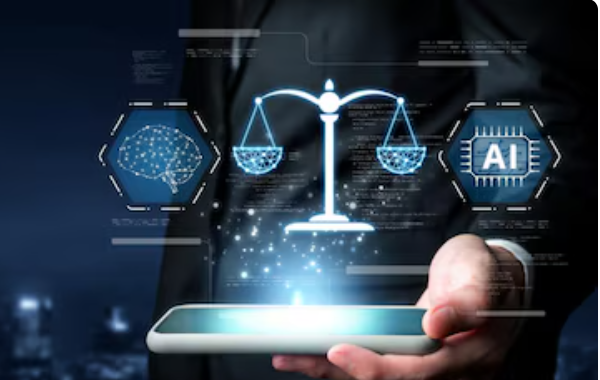
Innovation in finance has frequently surpassed knowledge. The early 2000s saw the rise of derivatives. securities backed by mortgages prior to 2008. Efficiency was promised by both. They were all concealedly fragile. As this develops, there is a sense that AI may take a similar course, becoming first beneficial before becoming unstable.
For their side, private equity firms contend that AI increases transparency and efficiency. It aids in early danger identification. It encourages wiser choices. And it might be. However, fairness for others does not necessarily follow from efficiency for one side.
In the UK, corporate insolvencies are already on the rise. In smaller communities, empty storefronts are a reflection of more than just economic cycles. Decisions made elsewhere, frequently in offices distant from the impacted populations, are reflected in them. Pressures like those weren’t caused by AI. However, it might be speeding them up.
MPs are now advocating for stress testing tailored to AI. In order to understand how algorithms might act under financial strain, they want regulators to model the worst-case situations. It feels like a long delayed and pressing request. Rarely does technology forewarn us of its dangers.
In times of stress, it makes them visible. Beneath the policy argument, a more profound philosophical dilemma is also becoming apparent. Who is really in charge when machines start influencing financial results? The programmers? The financiers? The establishments?
Nobody seems quite at ease responding to that. Voices rose and fell, papers shuffled, and the investigation proceeded in the committee chamber. London went about its daily business outside. There were buses. The markets opened. The screens wavered.